




.svg)


.webp)

Data discovery helps users find data. Data catalogs help enterprises trust, govern, and operationalize it. The difference becomes critical at scale.
Teams rarely struggle to find more data. They struggle to know which data they can trust. That is why the debate around data catalog vs data discovery matters more now than ever.
As enterprise data management spending rises from $111.28 billion in 2025 to $123.04 billion in 2026, many teams still treat data discovery tools and an enterprise data catalog as the same thing.
They are not. One speeds up access. The other builds trust, governance, and usable context. At scale, that gap decides whether self-service works or turns into searchable confusion.
Why This Confusion Exists in Modern Data Stacks
The confusion around data catalog vs data discovery did not appear overnight. It developed as the modern data stack expanded and analytics tools prioritized speed over governance.
Early BI platforms popularized self-service data discovery, allowing analysts to search, preview, and explore datasets without waiting for engineering teams.
As these features gained traction, many data discovery tools began positioning simple search and exploration capabilities as full data management solutions.
Vendors reinforced this perception by marketing overlapping features such as:
- Dataset search and filtering
- Metadata tags and descriptions that support metadata discovery
- Dataset previews and sampling
- Collaboration and shared exploration
These similarities blur the data discovery vs catalog comparison, but the underlying purpose of each system is different. Discovery emerged from analytics workflows focused on accessibility and speed. A data catalog evolved from engineering and governance needs, where ownership, lineage, and compliance matter.
As enterprise data ecosystems grew, organizations realized that data search vs governance was not a trade-off. Discovery solved the problem of finding data. Governance solved the problem of trusting it.
The market evolved in that order. Discovery came first. Governance followed once scale exposed the risks of unmanaged data.
What Is Data Discovery?
In modern analytics environments, data discovery tools help teams quickly locate and evaluate datasets across warehouses, lakehouses, and operational systems. As organizations push for faster self-service analytics, adoption continues to rise.
The data discovery market is projected to grow from $15.4 billion in 2025 to $63.9 billion by 2035, at a 15.3% CAGR. This growth reflects a clear shift: teams want faster access to usable data without waiting on technical handoffs.
In the context of data catalog vs data discovery, discovery refers to the accessibility layer. It helps users search, preview, and explore data quickly. Many of these workflows build on data discovery tools and techniques, while stronger context often comes from how metadata management improves data discoverability.
Core Capabilities
Data discovery platforms are designed for speed and exploration.
- Search and filtering: Users find datasets through keywords, tags, or natural-language queries, often supported by metadata discovery.
- Dataset previews and samples: Quick previews help users check relevance before running deeper analysis.
- Basic profiling: Capabilities similar to modern data profiling reveal schema patterns, distributions, and anomalies.
- Self-service exploration: Visual interfaces let users begin analysis without relying on engineering teams.
Primary Users
These platforms mainly support:
- Analysts building dashboards and reports
- Business users exploring operational data
- Exploratory data scientists testing hypotheses
Where Discovery Excels
Discovery works best when teams need speed.
- Faster insights: Users can locate relevant datasets in minutes.
- Reduced dependency on data teams: Self-service access lowers routine requests.
- Ad-hoc analysis: Teams can investigate new questions immediately.
As platforms evolve, some capabilities now intersect with ideas seen in agentic AI, but discovery still centers on access first.
What Is a Data Catalog?
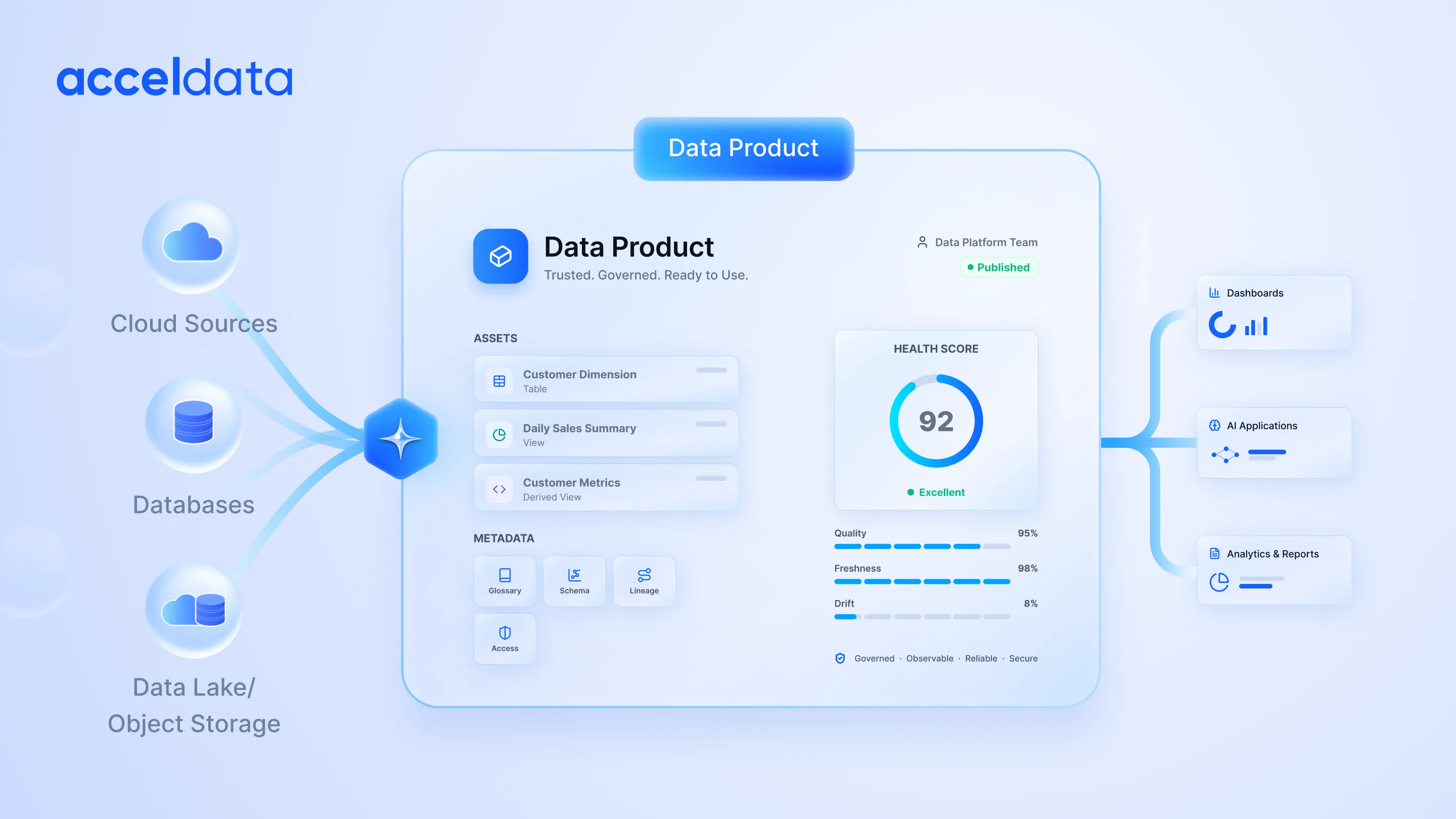
An enterprise data catalog is the system that organizes, documents, and governs an organization’s data assets. While data discovery tools help users locate datasets quickly, catalogs focus on ensuring those datasets are trustworthy, compliant, and operationally reliable.
The global data catalog market was valued at $1.27 billion in 2025 and is projected to reach $4.54 billion by 2034, growing at a 14.42% CAGR. This shift reflects how enterprises are moving beyond simple search toward governed, trusted data operations.
In discussions around data catalog vs data discovery, catalogs represent the governance layer of the data ecosystem. They maintain authoritative context about datasets, including ownership, transformations, and policies.
Through structured metadata captured via metadata management, organizations gain visibility into how data is created, used, and maintained across the enterprise.
Core Capabilities
Enterprise catalogs provide the operational context required for trusted data use.
- Centralized metadata management: A unified inventory of datasets enriched with technical and business context through robust metadata discovery.
- Ownership and stewardship: Assigned data owners maintain accountability for quality, updates, and lifecycle management.
- Business definitions and glossaries: Shared terminology ensures teams interpret metrics and datasets consistently.
- Lineage and impact analysis: Visual mapping of data flows using data lineage reveals how datasets move from source to consumption.
- Governance and compliance controls: Policies and audit mechanisms help organizations streamline data governance for better compliance.
Primary Users
Data catalogs mainly support stakeholders responsible for reliability and governance.
- Data engineers maintaining pipelines and infrastructure
- Governance teams defining policies and standards
- Platform and compliance leaders managing operational risk
Side-by-Side Comparison: Catalog vs Discovery
Understanding data catalog vs data discovery starts with their core purpose. Data discovery tools help users quickly locate datasets through search and metadata discovery.
An enterprise data catalog, however, focuses on governance, lineage, and policy enforcement to ensure the data being used is trustworthy. In other words, discovery answers where data exists, while catalogs answer whether that data can be safely used across the organization.
Many enterprises begin with discovery to improve access but later adopt catalog capabilities through platforms such as data catalog software or an AI data catalog to manage data reliability at scale. The data discovery vs catalog comparison below highlights how these approaches differ in practice.
This comparison clarifies the difference between data search vs governance: discovery improves access, while catalogs ensure accessed data remains reliable, compliant, and usable across enterprise workflows.
Why Discovery Alone Breaks at Enterprise Scale
As organizations scale, relying only on data discovery tools exposes structural gaps that a simple search cannot solve. While discovery improves access through metadata discovery, it lacks the governance controls needed to maintain reliable enterprise data.
This gap is central to the data catalog vs data discovery debate: discovery helps teams find datasets, but it does not ensure accountability, policy enforcement, or long-term trust. Without the governance capabilities of an enterprise data catalog, these weaknesses compound as data volumes grow.
Common enterprise failures include:
- No ownership accountability: Without clear data ownership, teams discover datasets but cannot confirm who maintains them or whether the information is current.
- No policy enforcement: Discovery surfaces sensitive data but cannot enforce a data protection policy, increasing compliance risk.
- Stale or misleading datasets: Without monitoring tied to discovery, outdated data often drives analysis.
- No blast-radius visibility: Schema changes break downstream systems because discovery cannot trace dependencies.
- Trust erosion across teams: As reliability drops, teams duplicate datasets—illustrating why data governance fails in discovery-only environments.
The takeaway in this data discovery vs catalog comparison is clear: discovery improves access, but data search vs governance ultimately determines whether data remains trustworthy at scale.
Where Data Catalogs Go Beyond Discovery
At enterprise scale, the distinction in the data catalog vs data discovery discussion becomes clear. While data discovery tools help users locate datasets through metadata discovery, they rarely ensure that the data is trustworthy, governed, or ready for operational use.
An enterprise data catalog fills that gap by embedding governance, context, and operational intelligence directly into the data ecosystem. This shift from simple search to governance-driven data management is central to the broader data discovery vs catalog comparison. In short, discovery improves access, while catalogs ensure reliability, accountability, and enterprise-wide trust.
1. Trust and Certification
Catalogs create verified datasets through structured data stewardship workflows. Data stewards validate quality, lineage, and policy compliance before certifying datasets as trusted. This certification helps teams avoid unreliable sources and ensures consistent decision-making.
In AI-driven environments, verified datasets are even more critical because model performance depends on trustworthy training data. Platforms built around an agentic AI enterprise data catalog further automate trust signals and governance controls.
2. Lineage-Driven Impact
Understanding how data flows across systems prevents hidden failures. Catalogs integrate data lineage tools that map upstream sources and downstream dependencies.
When a dataset changes, teams can immediately see which dashboards, pipelines, or models are affected. This visibility supports safer schema changes, proactive testing, and faster incident resolution.
3. Governance Execution
Discovery tools often document policies, but catalogs enforce them. Access permissions, masking rules, and compliance policies run automatically across data consumption points. With advances in governance automation, AI is transforming data access control, enabling catalogs to enforce security policies dynamically and reduce manual oversight.
4. AI Readiness
Modern data ecosystems increasingly support agentic AI workflows, where autonomous agents interact with enterprise data. Catalogs provide the metadata foundation these systems require: data relationships, quality indicators, and approved usage contexts. Without this structured metadata layer, AI systems struggle to interpret and use enterprise data safely.
Together, these capabilities reinforce the core difference in data search vs governance: discovery helps teams find data, while catalogs ensure the data they use is trusted, governed, and ready for enterprise-scale analytics and AI.
Do Enterprises Need Both?
Yes. In practice, data catalog vs data discovery is not a choice. Enterprises need to balance usability with governance.
Data discovery tools help users find and explore datasets quickly, while an enterprise data catalog ensures those datasets are reliable, governed, and understood in context. Without discovery, data remains hidden. Without cataloging, it becomes difficult to trust.
The most effective data environments integrate both capabilities so that access and governance work together.
- Discovery improves usability: Search, previews, and exploration make datasets easy to locate and evaluate through metadata discovery and intuitive interfaces.
- Catalogs ensure reliability: Catalog platforms provide ownership, lineage visibility, and governance controls that prevent inconsistent or unverified data usage.
- Integration is essential: Modern architectures combine discovery with governance signals so users can search data while seeing quality, ownership, and lineage context.
In enterprise environments, this integration resolves the tension between data search vs governance. Discovery accelerates access. Catalogs enforce trust. Together, they create a foundation for scalable analytics and AI-ready data operations.
How Modern Platforms Are Converging
The line between data catalog vs data discovery is narrowing as modern platforms evolve. Organizations no longer want separate tools for search, governance, and quality monitoring. Instead, vendors are blending data discovery tools with catalog capabilities to deliver a unified experience where users can find data while understanding its reliability.
Today, many platforms combine discovery and governance through features such as:
- Discovery embedded in catalogs: Modern enterprise data catalog platforms now include search, exploration, and metadata discovery capabilities so users can locate datasets without leaving governance environments.
- Governance-aware search results: Search interfaces increasingly surface ownership, policy flags, and signals from data quality governance, helping teams evaluate whether datasets are safe to use.
- Quality and freshness signals in discovery: Metrics from monitoring systems and data quality tools appear alongside datasets so users can see reliability indicators before analysis.
- Observability signals feeding catalogs: Automated monitoring continuously updates catalog metadata with lineage, usage, and freshness insights.
Convergence improves the user experience, but it does not eliminate the need for governance. Discovery enhances accessibility. Catalog foundations ensure trust and compliance at enterprise scale.
Common Buying Mistakes Enterprises Make
When evaluating platforms in the data catalog vs data discovery debate, enterprises often prioritize immediate usability over long-term governance. This leads to tools that help teams find data quickly but fail to ensure its reliability. As data ecosystems scale, these early decisions create operational risks around compliance, ownership, and data quality.
The most common mistakes include:
- Choosing discovery-only tools: Organizations adopt powerful data discovery tools with strong search and exploration features but limited governance controls, leaving gaps in policy enforcement and data accountability.
- Over-indexing on UI and search: Attractive interfaces and fast search improve usability, but they cannot replace capabilities such as lineage tracking, ownership management, and quality monitoring.
- Ignoring lineage and governance: Some teams underestimate the importance of governance until regulatory audits or production incidents expose missing context around data origins and transformations.
- Treating catalogs as documentation tools: Many enterprises implement an enterprise data catalog only to document datasets instead of actively governing them through policies, lineage visibility, and operational metadata.
Avoiding these mistakes requires recognizing that data search vs governance must work together for reliable analytics.
How Enterprises Should Decide
Choosing between solutions in the data catalog vs data discovery discussion depends on an organization’s data maturity, governance needs, and analytical scale. Some teams primarily need faster access to datasets, while others require stronger oversight to ensure data quality and compliance.
The decision often comes down to whether the organization is solving a search problem or a governance problem. The checklist below helps clarify where the priority should lie.
Decision checklist:
- Do you need trust or just access? If teams struggle with unreliable datasets, ownership gaps, or inconsistent metrics, an enterprise data catalog becomes essential. If users simply cannot locate datasets, data discovery tools may address the immediate need.
- How regulated is your data? Highly regulated industries require governance-first platforms where data search vs governance considerations prioritize compliance and auditability.
- How many teams use shared datasets? As collaboration expands, catalogs help maintain shared definitions and coordinated governance.
- Are AI initiatives planned? AI models require consistent, governed inputs. Strong metadata discovery and governance foundations reduce the risk of unreliable training data.
Move From Data Search to Trusted Data Systems With Acceldata
The debate around data catalog vs data discovery often begins with access. But as data ecosystems expand, enterprises realize that search alone cannot sustain reliable analytics.
Discovery helps teams locate datasets quickly, while catalogs ensure those datasets remain governed, trusted, and operationally usable. Successful organizations combine both capabilities to move from simple access to dependable data systems.
Acceldata enables this shift through its Agentic Data Management Platform, where intelligent automation continuously monitors data quality, lineage, and governance signals. This transforms fragmented discovery workflows into trusted, enterprise-grade data operations.
Request a demo to see how Acceldata helps teams move from data search to trusted data systems.
FAQs
Is data discovery the same as a data catalog?
No, data discovery focuses on finding and exploring data through search and visualization tools. Data catalogs organize and govern data assets through comprehensive metadata management, lineage tracking, and policy enforcement.
Can data discovery replace a data catalog?
Discovery tools cannot replace catalogs for enterprises requiring governance, compliance, and quality management. While discovery enables data access, catalogs ensure data remains trustworthy and compliant at scale.
When should enterprises invest in a data catalog?
Organizations should implement catalogs when facing governance requirements, managing shared datasets across teams, experiencing data quality issues, or preparing for AI initiatives that demand reliable data foundations.
How do catalogs improve AI readiness?
Catalogs provide structured metadata, quality metrics, and lineage information that AI systems require to understand and appropriately use data, preventing AI failures due to poor data quality or misuse.
Do modern catalogs include discovery features?
Yes, leading catalog platforms now embed discovery capabilities, including natural language search, visual exploration, and self-service analytics, while maintaining comprehensive governance foundations.


.png)