




.svg)




Feel like you're lost in your own company's data? Today, data grows so fast that it becomes scattered, duplicated, and outdated—leading to instant fragmentation and mistrust.
Furthermore, disconnected systems not only waste time but also make analytics questionable and decision-making inaccurate. 81% of senior business leaders acknowledged that their data was scattered across different silos within their organizations.
This is why a data catalog is essential. It is a system that indexes, centralizes organization metadata, and creates a single source of truth. As a result, teams can quickly find accurate data, ensure compliance, and apply consistent governance policies.
What Is Data Catalog Software?
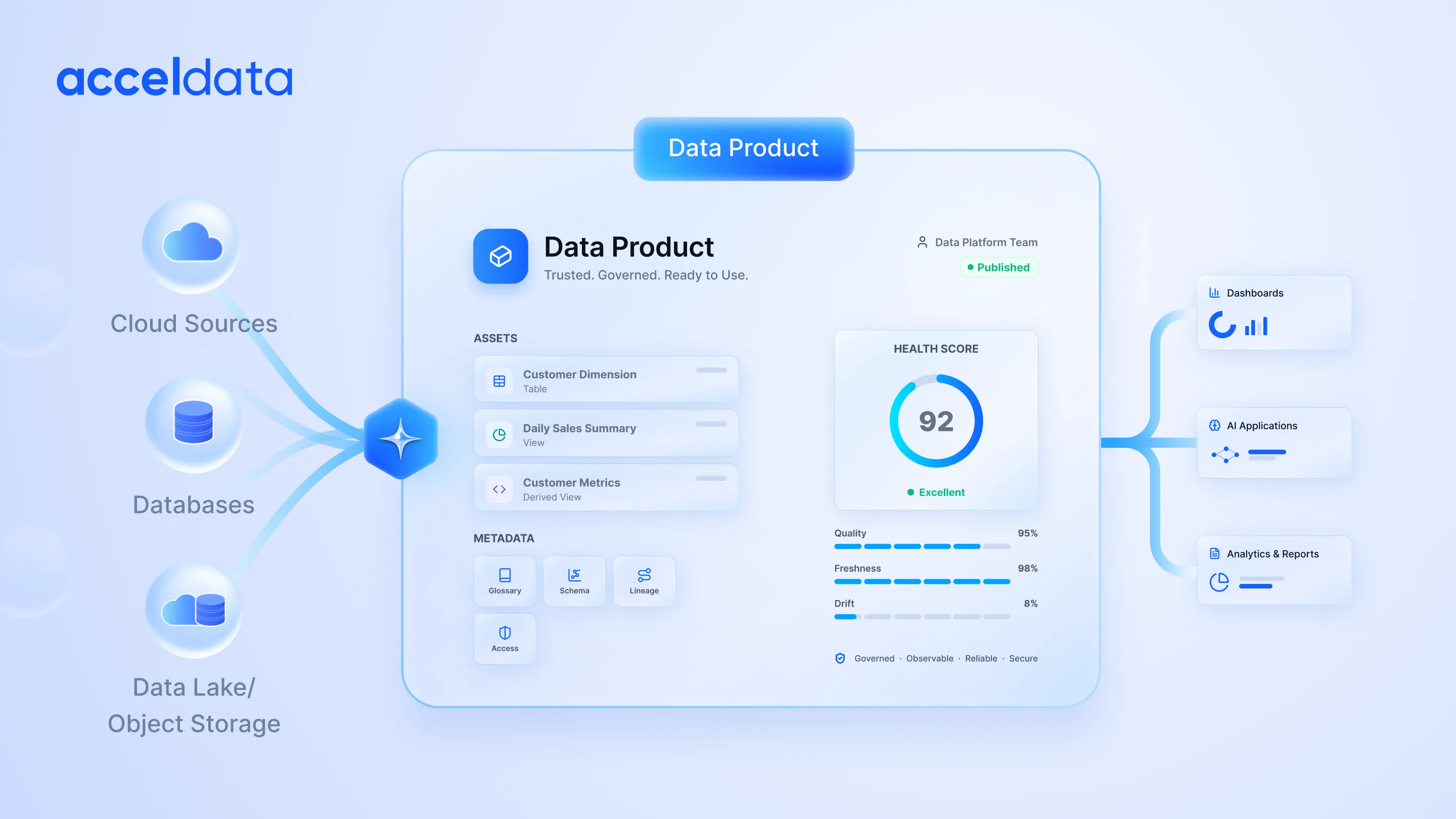
A data catalog is a single source of truth for metadata, data lineage, and access details, making data safe and easy for everyone in your organization to use.
Effective data catalog tools ensure strong data governance by managing metadata to enforce security, quality, and compliance across the entire data lifecycle.
Imagine a healthcare provider managing patient records spread across multiple departments—lab results in one system, billing data in another, and treatment histories in electronic health records.
Without an active data catalog, clinicians risk pulling outdated or incomplete data, which could impact patient care and even breach HIPAA regulations. A robust data catalog solves this by automatically tagging sensitive health information, setting access controls based on roles, and tracking lineage so every piece of data is traceable and compliant. This ensures doctors, administrators, and analysts all work with trusted, secure information.
Data catalog tools set up guardrails: who can see what, how data is described, and how changes are tracked. With these controls in place, you move from silos and confusion to clarity and order.
Benefits of Choosing the Right Data Catalog Software
Every business has unique challenges it aims to solve with technology and new solutions. A data catalog that’s a perfect fit for your specific problems won't just solve them; it will also boost your business's overall efficiency. Here are some benefits that a right data catalog solution has to offer:
- Improved data discovery: The right catalog eliminates the endless search for datasets by indexing metadata and providing intuitive search and filtering. This not only saves time but also ensures your employees spend their energy analyzing data instead of hunting for it.
- Better data governance: Modern catalog tools enforce clear rules on who owns the data, how it’s used, and what policies apply. This means compliance isn’t an afterthought—it’s built directly into daily workflows, reducing risks of fines or breaches.
- Increased collaboration: When teams have a shared space to annotate datasets, define terms, and add business context, silos break down naturally. Instead of arguing over “which report is correct,” everyone sees the same trusted source of truth.
- Enhanced decision-making: A well-organized catalog doesn’t just clean up your data environment; it directly impacts business intelligence. When leaders have fast access to reliable data, they make decisions with confidence and speed.
When a data catalog is set up properly, it empowers your teams by making collaboration simple, ensuring you stay compliant, and feeding your business strategy with reliable information. It’s essentially the direct link between messy, raw data and the clear, meaningful insights that fuel your growth.
Key Features to Look for in Data Catalog Software
While use cases vary by business, some features are a must-have in any data catalog software. Here are some key features you should look for:
- Metadata management: Good catalogs capture technical and business metadata so users understand not only where data comes from but also what it means. This makes it easier for both analysts and business users to use datasets correctly.
- Data lineage tracking: Lineage maps how data flows from source systems through transformations and into reports. With this visibility, you can trace errors back to their origin, simplify audits, and ensure stakeholders trust the insights.
- Automated data tagging and classification: It helps categorize data by domain, type, or sensitivity without burdening teams with manual work. This consistency ensures sensitive data is flagged correctly and makes data easier to discover at scale.
- Search and filtering capabilities: Advanced catalogs let you filter by tags, owners, usage, or even natural language queries. Strong search means less frustration for users and faster turnaround for data-driven projects.
- Integration with other tools: Your catalog should connect seamlessly with warehouses, ETL tools, BI dashboards, and data governance solutions. No integration means metadata stays stuck in silos, completely undermining what a catalog is for.
The best catalog isn’t the one with the most features—it’s the one with the right features. Choosing carefully ensures your investment actually delivers business-wide value instead of gathering dust.
How to Choose the Right Data Catalog Software
Data catalog software selection is less about “the best tool” and more about the “best fit” for your business. To get the most value, you need a thorough assessment—aligning your current business needs with the tool's specific capabilities. This means evaluating where you are now and anticipating where you want to grow.
- Assess your needs: Start by listing your organization’s main data challenges, whether it’s scalability, governance, or user adoption. This clarity helps you filter out tools that look impressive but don’t actually solve your real problems.
- Evaluate software vendors: Look beyond flashy demos—check vendor track records, customer reviews, and customer support responsiveness. Talking to long-term users of the tool can give you an honest view of how the tool performs in production.
- Scalability and flexibility: Data volume and complexity will never shrink, so your catalog tool must scale with your data. Flexibility in deployment (cloud, on-prem, or hybrid) ensures the tool adapts as your business evolves.
- User experience: Even the most feature-rich catalog fails if people don’t use it. Choose software with an intuitive, user-friendly interface so analysts, engineers, and business users all feel comfortable adopting it.
Ultimately, choosing a catalog isn’t just a technical decision—it’s a business strategy. The right software will serve as a long-term backbone for data governance, discovery, and collaboration across your organization.
Best Practices for Implementing Data Catalog Software
Even the best data catalog software won’t deliver results if it’s poorly implemented. Here are some best practices to ensure you implement it well:
- Start with a clear strategy: Don’t just “install and hope.” Define measurable goals like reducing duplicate reports, improving data discovery times, or ensuring compliance audits take less effort.
- Ensure cross-departmental collaboration: Data is used differently across teams, so include IT, compliance, and business users from the start. This collaboration ensures the catalog reflects actual workflows and isn’t seen as just another IT tool.
- Train employees: Training should be role-based, practical, and continuous. When your employees understand how the catalog makes their jobs easier, they’ll adopt it faster, and using the tool will become a daily habit.
- Regular updates & maintenance: A catalog that isn’t refreshed with new sources and updated metadata quickly loses value. Schedule regular reviews and encourage user feedback across your organization so the catalog remains an active, trusted resource.
By treating your data catalog as a long-term investment rather than a one-off project, you maximize its impact. Done right, the software evolves into a centralized engine for operational efficiency and data trust, moving the focus from searching to using the data.
Turning Data Catalog Software into a Revenue Asset with Acceldata
Choosing a data catalog software isn’t just ticking checkboxes; it’s an investment with ongoing payoffs if done right. The right tool, with strong metadata support, lineage, governance features, and adoption across teams, becomes a foundation for your data management and analytics maturity.
Acceldata’s Agentic Data Management platform is built for exactly this kind of long-term value. With capabilities like automated metadata collection, lineage tracking, ownership policies, search and natural-language discovery, and built-in governance controls, it helps you move beyond manual cataloging to dynamic, trustworthy data organization.
It also integrates observability and data quality monitoring, ensuring your cataloged data remains accurate and reliable over time. Its automation reduces dependency on manual effort, while collaboration features make it easier for teams across business and IT to stay aligned.
By combining data cataloging with governance, anomaly detection, and AI-ready pipelines, Acceldata doesn’t just manage data—it transforms it into a strategic asset that scales with your organization.
Ready to choose the right data catalog software? If you’re ready to simplify discovery, enforce governance, and organize data in a way that accelerates insight, it’s worth exploring software that scales with your needs.
Contact us to learn how our data catalog software solutions can streamline your data organization, improve governance, and enhance data discovery across your organization.
FAQs
1. What is data catalog software, and why is it important for organizations?
Data catalog software is a tool that organizes, indexes, and manages an organization’s metadata, making it easy to find, understand, and use data. It’s important because it centralizes your data assets, reduces redundancy, improves data quality, and supports governance and compliance initiatives.
2. How does data catalog software improve data discovery and governance?
By centralizing metadata, tagging, and lineage information, data catalog software allows users to quickly locate and understand datasets. It also enforces governance policies, access controls, and compliance standards, ensuring that your data is accurate, secure, and trustworthy.
3. What key features should I look for when choosing data catalog software?
Look for automated metadata management, robust search and filtering, data lineage tracking, integration with existing systems, collaboration capabilities, and built-in governance and compliance controls. These features ensure efficient discovery, organization, and secure usage of data.
4. How do I choose the right data catalog software for my organization?
Evaluate your organization’s data complexity, integration needs, scalability requirements, and user experience preferences. Compare vendors based on features, support, flexibility, and the ability to align with your long-term data management strategy.
5. What are the best practices for implementing data catalog software successfully?
Start with a clear strategy for cataloging and governance, involve cross-departmental teams, provide relevant user training, and keep the catalog updated with new data sources and metadata. Continuous monitoring, feedback loops, and alignment with business goals will ensure maximum adoption and value across your organization.


.png)