




.svg)


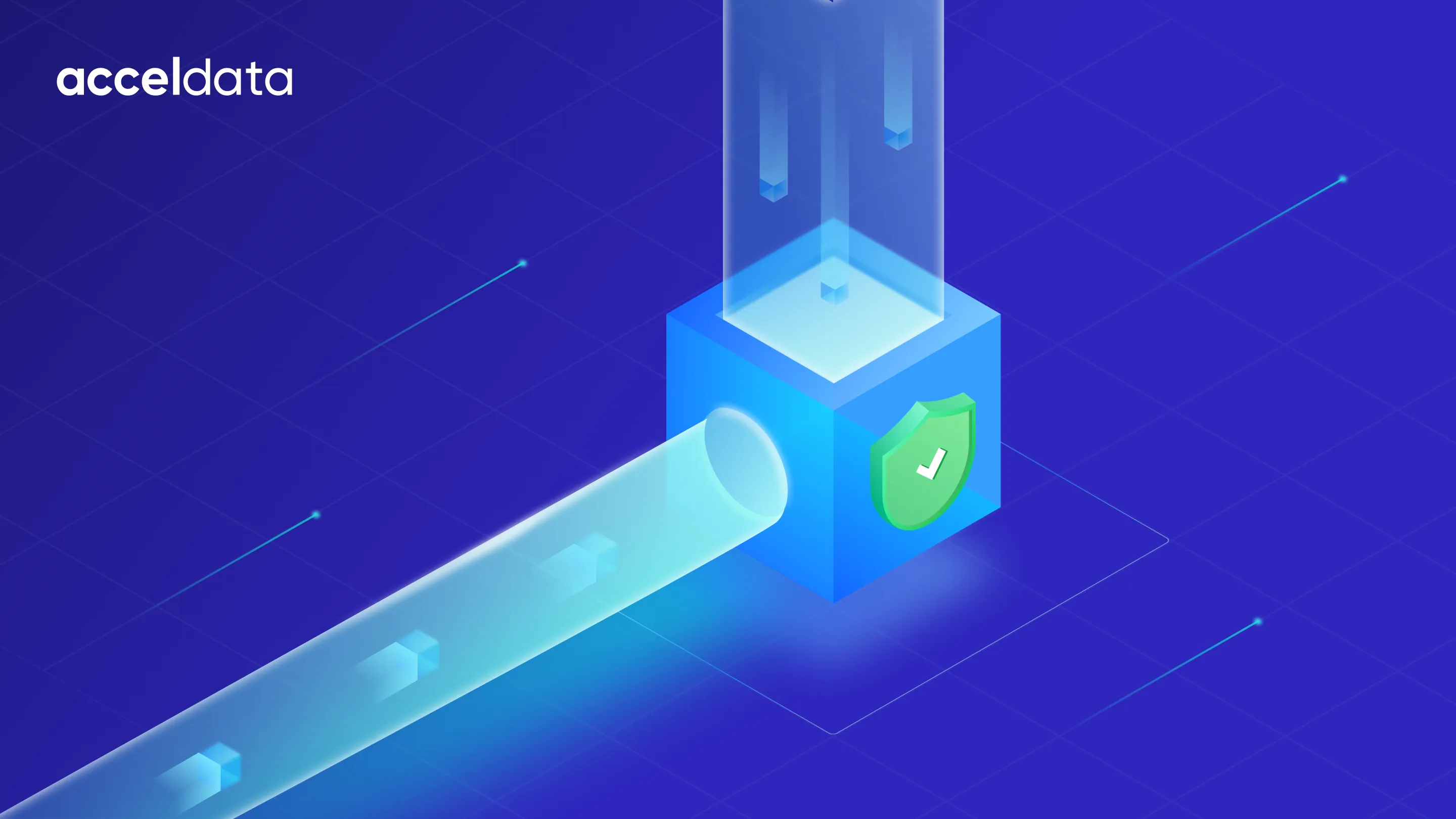

Traditional governance approaches rely heavily on documentation and external tools, but modern data environments require governance directly embedded in data pipelines. Implementing governance within pipelines improves visibility, automation, and enforcement of policies across the data lifecycle.
Modern data ecosystems are built around complex data pipelines that continuously ingest, transform, and distribute data across analytics systems. These pipelines involve multiple components: ingestion systems, transformation frameworks, orchestration platforms, data warehouses, and analytics tools. Data flows through all of them, often across multiple cloud environments, at speeds that make manual oversight impractical.
As organizations scale this infrastructure, governance challenges emerge inside these pipelines. Transformations go undocumented. Schema changes break downstream systems. Data lineage becomes invisible. Access policies are enforced inconsistently or not at all.
Traditional governance approaches try to manage these problems from the outside, through external documentation, periodic audits, and manual tracking. But these approaches can't keep pace with pipelines that evolve daily and process millions of records continuously.
That's why many organizations are shifting toward pipeline-level data governance, where governance controls are embedded directly within data workflows. Instead of governing pipelines after the fact, you govern them as data flows through them.
This article explores how to implement data governance in data pipelines, the capabilities that should exist at each layer, and the architectural patterns that make scalable governance enforcement possible.
Why Governance Must Be Embedded in Data Pipelines
Governance that lives outside your pipelines is governance that's always one step behind. Several factors make embedding governance directly into pipeline workflows essential for modern data teams.
Rapid pipeline evolution
Data pipelines are updated frequently as new datasets are added, transformation logic changes, and business requirements shift. External documentation systems can't keep up with this pace. By the time someone updates the governance docs, the pipeline has already changed again.
Increasing data volumes
Large-scale environments process vast amounts of data across multiple systems simultaneously. Manual governance can't maintain oversight at this scale. Automated governance within pipelines ensures every dataset is checked, classified, and tracked as it moves through the system.
Complex data dependencies
Pipelines don't operate in isolation. They depend on upstream datasets and feed downstream analytics, dashboards, and ML models. Without lineage visibility built into the pipeline itself, troubleshooting a single data issue can take hours of manual tracing across systems.
Regulatory and compliance requirements
Regulations like GDPR, HIPAA, and the EU AI Act require organizations to demonstrate how sensitive data moves across their systems. Embedding governance within pipelines creates the continuous, auditable trail that compliance demands.
Key Governance Capabilities That Should Exist in Pipelines
Not all governance capabilities belong at the pipeline level. But several core functions must operate within your data workflows to maintain visibility, quality, and control as data moves through the system.
Automated metadata collection
Every pipeline should automatically capture metadata as data flows through it. This includes dataset names, schema definitions, transformation logic, data ownership, and update timestamps. Automated collection ensures your governance systems maintain accurate visibility without relying on someone to manually document every change.
Schema validation
Schema validation mechanisms ensure that incoming datasets conform to expected structures before they enter the pipeline. When a source system sends data with unexpected columns, changed data types, or missing fields, schema enforcement catches it at the gate rather than letting it cascade into downstream failures.
Data lineage tracking
Pipelines should capture lineage information that describes how datasets are created, transformed, and consumed. This lineage provides visibility into upstream and downstream dependencies, enabling your team to assess the impact of any change before it's made and trace the root cause of any issue after it's detected.
Data access controls
Governance systems should enforce role-based access controls (RBAC) within data pipelines to ensure only authorized users and systems can access sensitive datasets. Access policies should be applied automatically based on data classification, not managed through manual permission requests.
Data quality checks
Data quality validations should run as an integral part of pipeline execution. These checks ensure data reliability before data reaches downstream systems. Key validations include:
- Completeness checks: Verifying that required fields are populated and no critical data is missing.
- Format validation: Ensuring data conforms to expected formats, types, and value ranges.
- Anomaly detection: Flagging unexpected patterns like sudden volume drops, distribution shifts, or freshness delays.
Capability summary
| Governance Capability | Purpose |
|---|---|
| Metadata collection | Capture dataset and pipeline information automatically |
| Schema validation | Prevent incompatible schema changes from entering pipelines |
| Lineage tracking | Trace data dependencies across pipeline stages |
| Access control | Restrict dataset access based on roles and classification |
| Data quality checks | Ensure data reliability before downstream consumption |
Governance Across the Three Pipeline Layers
Pipeline-level governance isn't a single checkpoint. It operates across three major stages of the data lifecycle, with different controls appropriate at each layer.
Ingestion layer governance
The ingestion layer is where raw data enters your platform from source systems. Governance at this stage acts as the first line of defense, ensuring data meets your standards before it flows any further.
Key governance checks at this layer include:
- Schema validation: Confirming that incoming data matches expected structures and rejecting or quarantining data that doesn't conform.
- Source system verification: Ensuring data is arriving from authorized, known sources rather than unexpected or unapproved systems.
- Sensitive data detection: Automatically scanning for PII, PHI, or other sensitive data types and applying appropriate classification and handling rules.
These checks prevent bad data from entering your platform in the first place, which is far more efficient than catching and fixing issues downstream.
Transformation Layer Governance
Transformation pipelines convert raw datasets into structured, analytics-ready data. This is where most of your business logic lives, and where governance gaps tend to create the biggest problems.
Governance controls at this layer include:
- Lineage tracking across transformations: Capturing how data changes at each step so you can trace any metric or dataset back to its source.
- Metadata capture for new datasets: Automatically documenting any new tables, views, or datasets created during transformation.
- Data quality validation: Running quality checks after transformations to ensure outputs meet expected standards before they reach consumers.
Without governance at this layer, transformations become black boxes where data goes in, something happens, and different outputs emerge with no traceable logic.
Consumption Layer Governance
The consumption layer includes data warehouses, dashboards, analytics tools, and ML models. This is where data is consumed by business stakeholders and AI systems.
Governance mechanisms at this layer include:
- Dataset access control: Ensuring only authorized users and applications can access specific datasets based on their role and classification level.
- Metric definition standardization: Enforcing consistent calculations across dashboards and reports so different teams don't produce conflicting numbers.
- Usage monitoring: Tracking who accesses which data, how often, and for what purpose, supporting both security and compliance requirements.
Governance at the consumption layer ensures that the people and systems making decisions are working with trusted, governed data.
Architectural Patterns for Pipeline-Level Governance
Implementing governance in modern data stacks requires architectural patterns that enable automation, integration, and scalability. Four patterns form the foundation of effective data pipeline governance implementation.
Metadata-driven pipelines
In this pattern, metadata systems automatically collect information about datasets and transformations during pipeline execution. Every pipeline run generates metadata that feeds into your governance platform, keeping your catalog, lineage, and documentation current without manual effort.
Policy enforcement engines
Governance policies are defined centrally as code and enforced automatically during pipeline execution. When data enters a pipeline, the policy engine evaluates it against defined rules for schema compliance, access authorization, quality thresholds, and classification requirements. Policy-as-code makes enforcement consistent and auditable.
Data observability integration
Observability platforms monitor pipeline health continuously, detecting anomalies in data volume, freshness, distribution, and schema. These signals feed into your governance layer, triggering alerts or automated actions when governance rules are violated.
Lineage tracking systems
Lineage systems capture relationships between datasets across multiple pipeline stages, creating a complete map of data dependencies. This map enables impact analysis, root cause tracing, and governance coverage assessment across your entire data ecosystem.
These architectural components work together to create a governance infrastructure that operates as part of your data platform rather than alongside it.
Tools That Support Pipeline-Level Governance
Modern data platforms offer several categories of tools that support governance in modern data stacks. Here's how each contributes:
Data orchestration platforms
Tools like Airflow, Dagster, and Prefect coordinate pipeline execution and can trigger governance checks at specific points in the workflow. They provide the execution framework within which governance policies can be applied.
Metadata and catalog systems
These platforms collect metadata from pipelines automatically and make datasets discoverable across the organization. They serve as the central repository for governance information, enabling search, classification, and ownership tracking.
Data observability platforms
Tools like Acceldata's Agentic Data Management platform detect anomalies in data pipelines, monitor quality signals, and ensure governance rules remain enforced continuously. They provide the monitoring layer that makes governance proactive rather than reactive.
Policy enforcement frameworks
These frameworks enforce governance rules like schema validation, access control, and data classification automatically during pipeline execution. They translate governance policies into executable logic that runs alongside your data workflows.
Challenges Organizations Face When Implementing Pipeline Governance
Embedding governance directly into pipelines is the right approach, but it's not without challenges. Understanding these obstacles upfront helps you plan for them.
Integrating governance across tools
Modern data stacks include multiple tools that must share governance metadata. Getting your orchestration platform, warehouse, transformation framework, and BI tools to feed into a unified governance layer requires careful integration planning.
Maintaining performance
Governance checks must operate efficiently without slowing pipeline execution. Poorly designed quality checks or overly aggressive schema validation can introduce latency that affects data freshness. The key is to design governance controls that are lightweight by default and only trigger deeper checks when anomalies are detected.
Handling schema evolution
Data schemas evolve frequently as business requirements change and new data sources are added. Governance systems must manage schema changes gracefully, distinguishing between expected evolutions and unexpected breaking changes, without disrupting pipeline operations.
Ensuring adoption across teams
Pipeline governance only works if engineering teams integrate governance practices into their development workflows. This requires clear documentation, training, and a culture that treats governance as a standard part of pipeline engineering rather than an afterthought.
How Acceldata Brings Governance Into Your Pipelines
As data ecosystems become more complex, traditional governance approaches based on documentation and manual processes are no longer sufficient. Embedding governance directly into data pipelines is the path to maintaining visibility, enforcing policies, and ensuring data reliability as data flows through modern platforms.
By implementing automated metadata collection, schema validation, lineage tracking, access controls, and quality checks within your pipelines, you build governance frameworks that scale with your infrastructure rather than falling behind it.
Acceldata's platform makes pipeline-level governance operational through continuous monitoring, ML-driven anomaly detection, automated lineage tracking, and governance-aware AI agents that enforce policies at runtime across your entire data estate.
Book a demo to see how Acceldata can help you embed governance directly into your data pipelines and build data systems that are reliable, compliant, and governed by design.
Frequently Asked Questions
1. What is pipeline-level data governance?
Pipeline-level governance embeds governance controls directly within data workflows to enforce policies automatically as data flows through ingestion, transformation, and consumption stages. It replaces external documentation and manual checks with automated enforcement that operates continuously.
2. Why should governance be implemented in data pipelines?
Embedding governance in pipelines ensures metadata collection, lineage tracking, and policy enforcement happen automatically as data moves through your systems. This approach keeps governance current with pipeline changes and eliminates the lag that comes with manual, external governance processes.
3. What governance checks should exist in data pipelines?
Essential checks include schema validation at ingestion, metadata capture during transformation, data lineage tracking across all stages, role-based access controls at consumption, and data quality monitoring, including completeness, format validation, and anomaly detection.
4. How does lineage tracking improve governance?
Lineage provides visibility into how datasets are created, transformed, and consumed across pipelines. It enables faster root cause analysis when issues arise, supports impact assessment before changes are made, and creates the audit trail that compliance requires.
5. What tools support pipeline-level governance?
Metadata platforms, data orchestration tools like Airflow, data observability platforms like Acceldata, catalog systems, and policy enforcement frameworks all support pipeline-level governance. The most effective implementations integrate these tools into a unified governance layer.