




.svg)



You provision GPU clusters inside your own cloud account. The workloads stay within the VPC, Kubernetes access is locked down, and the infrastructure passes every internal security review. But your training data still moves through managed preprocessing, retrieval, or inference services where external platforms retain operational visibility.
AI architectures break down even with GPU ownership when they lack end-to-end data sovereignty. That means maintaining complete control over how data moves across the AI pipeline. The sovereign AI data center definition that matters includes both compute and data, not just where accelerators are deployed.
This article explores the infrastructure, controls, and deployment models required to build genuinely sovereign GPU AI environments.
Why GPU Compute Alone Is Not a Sovereign AI Architecture
GPU clusters are the acceleration layer of modern AI infrastructure. They increase training speed, improve inference throughput, and make large-scale AI workloads operationally viable. But GPU ownership alone does not determine whether your AI environment is sovereign.
The sovereignty posture of your AI environment is defined by where workload data moves, who can access it, and whether any stage of the pipeline operates outside your control boundary. For GPU AI workloads to remain genuinely sovereign, the entire data path must operate inside your environment from ingestion through training and inference. Training datasets, embeddings, orchestration metadata, telemetry, and inference inputs all form part of the sovereignty chain.
If any stage of that agentic workflow depends on third-party visibility or vendor-managed infrastructure, sovereignty breaks even if the GPUs themselves remain private. Your GPUs may power the workload, but your data pipeline determines whether the environment actually remains private, compliant, and fully under your control.
What Private Cloud AI Infrastructure Requires
To bring your GPU AI workloads inside infrastructure your organization directly controls, private cloud AI keeps compute, storage, and data processing within a defined boundary. The goal is not just private deployment, but controlled data movement across the entire AI stack.
Let’s break down how the model works and the data infrastructure involved.
The private cloud AI model
GPU workloads in a private cloud model run inside your own cloud account or on-premise infrastructure. AI processing and data operations remain within a defined boundary. Instead of relying on shared external platforms, your teams retain direct control over workload deployment and governance.
Private cloud AI infrastructure also enforces internal operational requirements around networking, access policies, operational visibility, and data residency. This helps organizations maintain consistent control across both the infrastructure and data layers of the AI environment.
The infrastructure components behind sovereign AI workloads
A complete private cloud AI infrastructure stack requires more than GPU availability. The surrounding storage, networking, and processing layers must also operate within the same controlled boundary to prevent unnecessary data exposure or external dependency risks.
In practice, sovereign AI infrastructure depends on a tightly controlled combination of compute, storage, and internal data processing layers.
- GPU-Capable Compute Infrastructure: AI workloads require orchestrated GPU environments that can allocate accelerator resources reliably across large-scale training and inference operations while maintaining workload isolation within the organization’s infrastructure boundary.
- VPC-Native Storage and Data Pipelines: AI data operations must remain inside private storage and internal processing layers without routing workloads through vendor-managed preprocessing, orchestration, or retrieval systems that introduce external visibility into the pipeline.
Private cloud AI determines where your infrastructure runs, while sovereign AI determines who controls access to the data and the operational layers surrounding it. Both are required for a fully sovereign AI environment.
The Data Egress Risk in GPU AI Deployments
Even when GPU workloads run inside private infrastructure, data egress risk can still appear across the AI pipeline. The risk emerges when training datasets, fine-tuning data, embeddings, or inference inputs leave your network boundary for processing, storage, or orchestration on external infrastructure.
In many AI environments, these movements happen quietly through managed services that sit outside the organization’s direct control. Data egress risk commonly appears in three areas of GPU AI deployments:
- Managed Training Platforms: Some managed AI training services process datasets outside the customer’s VPC, exposing raw training and fine-tuning data to vendor-controlled infrastructure during preprocessing or model execution.
- Externally Hosted Vector Stores: Managed vector databases often store embeddings on provider infrastructure outside the organization’s boundary. Since embeddings can retain recoverable semantic information from source data, externally hosted vector stores can become an indirect exposure point for sensitive datasets.
- Inference APIs and Query Logging: External inference APIs may retain prompts, responses, and operational metadata in provider-side logs unless enterprise data retention controls are explicitly configured and enforced.
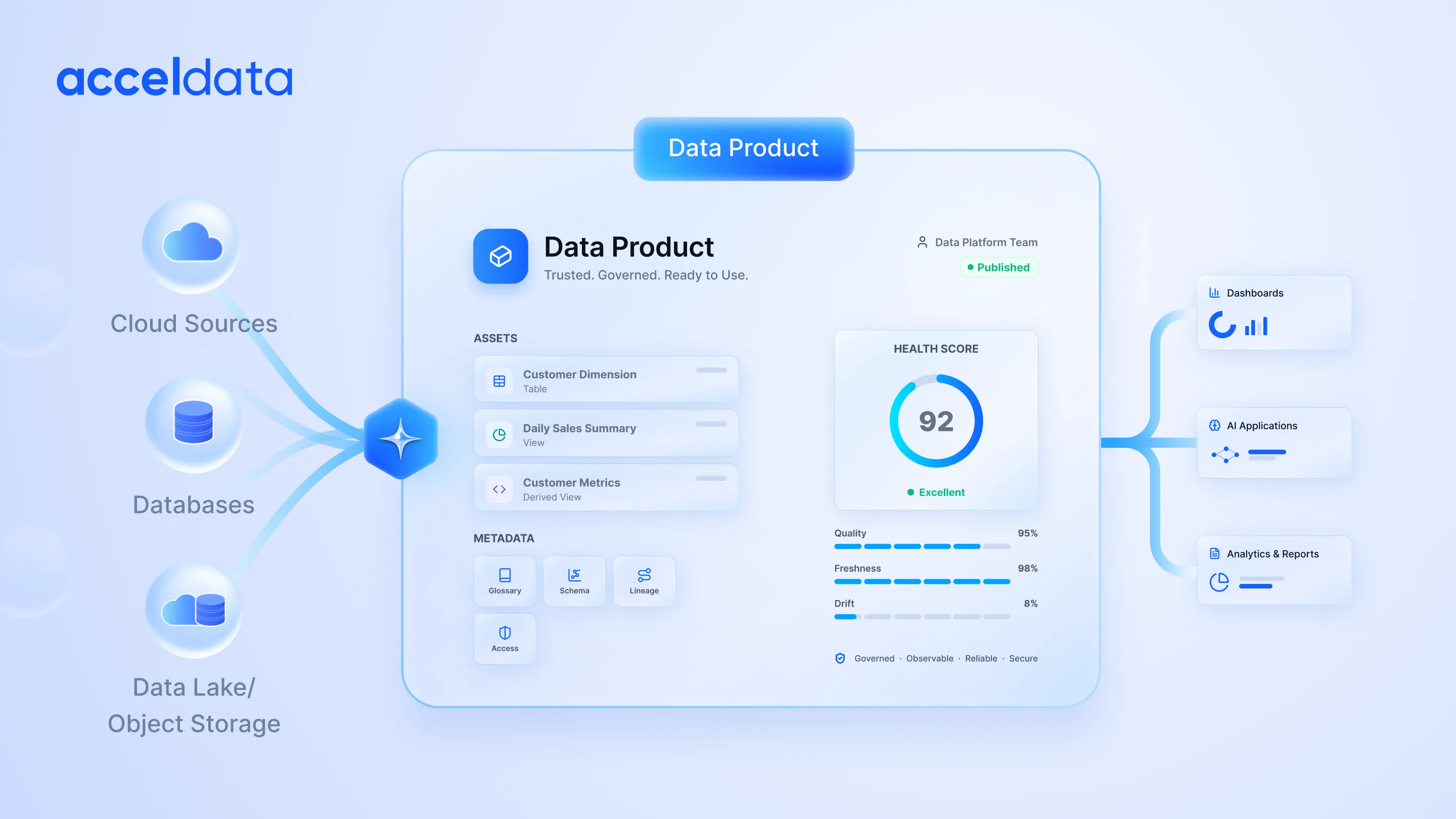
GPU-accelerated Spark pipelines can run entirely within the customer’s VPC and Kubernetes boundary. Acceldata’s xLake delivers this architecture by allowing training and inference data to remain inside the organization’s infrastructure throughout processing workflows. It's intelligent data warehousing also removes data egress to external infrastructure and keeps sensitive AI workloads well within the customer boundary.
Air-Gapped AI Deployments: When Sovereignty Requirements Are Absolute
Environments like defense, intelligence, government, and high-security financial services require stronger isolation than private cloud boundaries alone can provide. An air-gapped AI deployment with fully isolated infrastructure that eliminates outbound internet access.
Running AI workloads in such an environment involves more than disconnected infrastructure. The entire AI stack must be designed to operate without relying on external services or runtime connectivity.
What air-gapped AI infrastructure needs
Setting up a fully isolated AI environment adds several infrastructure and operational requirements. Consider these core components when deploying an air-gapped AI architecture:
- Isolated Compute and Storage: Compute, storage, networking, and orchestration layers must operate entirely within the organization’s controlled environment without relying on external infrastructure.
- Locally Stored Models and Dependencies: Model weights, container images, libraries, and ETL dependencies must be downloaded, validated, and stored locally before deployment since external registries and APIs are unavailable during runtime.
- Offline AI Pipelines: AI pipelines must function without outbound API calls or internet connectivity. This includes removing dependencies on hosted inference services, telemetry endpoints, cloud orchestration layers, and external licensing systems.
Operational Trade-Offs to Consider
Air-gapped AI environments provide the highest level of sovereignty and infrastructure isolation available for GPU workloads. At the same time, they require significantly greater operational maturity because teams must independently manage infrastructure updates, model repositories, data orchestration, and monitoring inside the isolated environment.
For organizations operating in defense, intelligence, or high-security regulated sectors, these trade-offs are often non-negotiable. For others, understanding the operational cost of full isolation helps determine where partially connected environments may provide a more practical balance between sovereignty and operational flexibility.
Deploying AI Agents on Private Cloud Data Infrastructure
Agentic workloads increase the complexity of data sovereignty with all their continuous retrievals, tool calls, and orchestration events. Each action becomes a potential data egress point if it interacts with infrastructure outside the organization’s control boundary.
As the systems scale, the number of these interactions increases significantly across a single workflow. Surrounding infrastructure must operate within the same controlled boundary as the models themselves.
Here's what you need when deploying sovereign AI agents on private cloud data infrastructure:
- VPC-Native Tool Endpoints: Tool calls should route through internally hosted APIs and services. That way, operational data, prompts, and workflow context never leave the organization’s network boundary.
- Locally Deployed Retrieval Infrastructure: Embedding indexes and retrieval systems must run inside private infrastructure. This helps keep semantic data from being exposed through provider-managed vector services.
- Internal Orchestration Layers: Agent orchestration systems need to manage prompts, memory, and intermediate state within the organization’s environment. This avoids routing workflow execution through external control planes or hosted orchestration APIs.
- Boundary-Aware Access Controls: Permissions, retrieval scopes, and tool access policies are best executed within governed infrastructure boundaries. This helps prevent uncontrolled data movement across autonomous workflows.
GPU-accelerated pipelines running inside a VPC-native architecture give agentic AI systems the throughput needed for continuous retrieval and orchestration workloads. This keeps workflow execution and data movement contained within the organization’s infrastructure boundary.
GPU Power Without Data Sovereignty Is an Incomplete Architecture
While GPU infrastructure powers LLM workloads, sovereignty determines whether those workloads remain secure, compliant, and operationally controlled at scale. As AI systems evolve from isolated models to continuous retrieval and agentic execution environments, the real architectural challenge shifts from compute ownership to controlling how data moves across the entire AI stack.
A sovereign GPU AI environment depends on keeping processing, orchestration, and retrieval inside infrastructure that your organization directly governs. xLake supports this model by running GPU-accelerated Spark pipelines and AI data operations within the customer’s infrastructure boundary, without introducing external processing dependencies.
See how xLake’s sovereign GPU AI architecture works. Book a demo at Acceldata.
Sovereign Data and GPU Workloads: Frequently Asked Questions
Why is data sovereignty important for GPU AI workloads?
GPU infrastructure only controls where AI workloads run. Data sovereignty determines whether training data, embeddings, prompts, and operational metadata remain protected from third-party access as they move through the AI pipeline.
What is private cloud AI, and how does it differ from sovereign AI?
Private cloud AI refers to GPU workloads running inside infrastructure your organization directly controls, such as your own cloud account or on-premise environment. Sovereign AI extends that control to the entire data path by preventing external access across processing, retrieval, orchestration, and operational layers.
What is an air-gapped AI deployment?
An air-gapped AI deployment runs on infrastructure with no outbound internet connectivity or access to external cloud services. Models, dependencies, and AI workflows operate entirely within the isolated environment using locally staged resources.
How does data egress risk affect GPU AI training?
Data egress risk appears when training datasets, embeddings, or inference activity leave the organization’s network boundary for processing or storage on external infrastructure. This can expose sensitive data even if the GPU environment itself remains private.
How does xLake support sovereign GPU AI workloads?
xLake runs GPU-accelerated Spark pipelines and AI data operations within the customer’s VPC and Kubernetes boundary. This helps organizations process AI workloads without routing sensitive data through external infrastructure or vendor-managed services.


.png)