



.svg)



VPC-Native Data Platform: The Architecture That Keeps Your Data From Leaving Your Control
Your compliance team finds the clause during audit prep: the managed platform vendor can access query execution logs, including data your team treats as confidential. That is not a paperwork problem.
Gartner estimates that over 80% of organizations now face privacy and data-protection requirements driven by data-sovereignty rules.
A VPC native data platform answers that pressure at the architecture layer. It is not a hosting preference. It keeps processing inside your network boundary through zero egress architecture, so control depends on design, not vendor trust, and support access has hard limits.
What VPC-Native Actually Means for a Data Platform
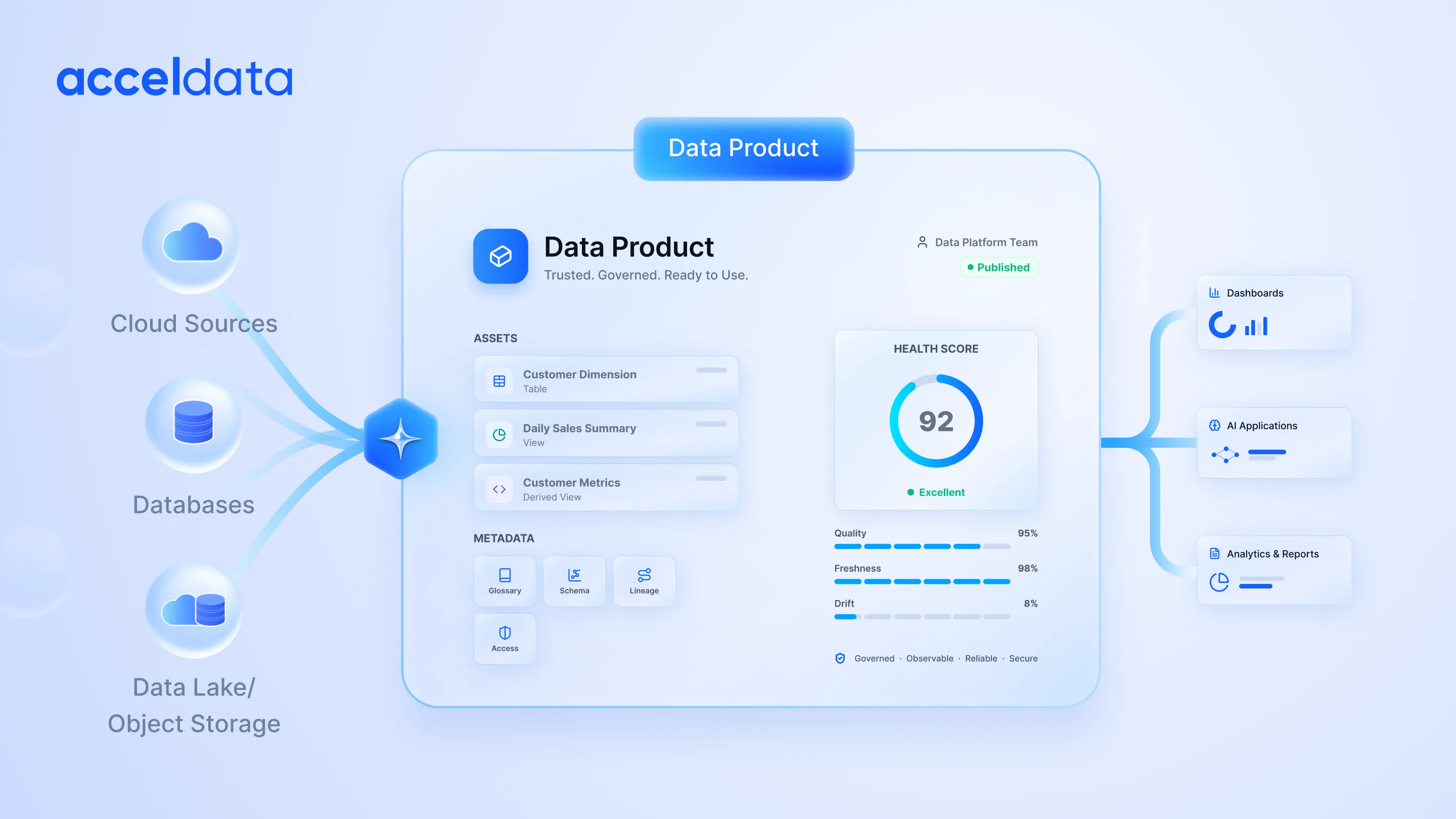
A VPC native data platform runs compute, storage, pipelines, and query processing inside your cloud account and VPC. The vendor deploys the software and manages orchestration, but your data plane stays inside your boundary. Query logs, metadata, training data, and workloads never move into vendor-managed infrastructure.
The separation between the control plane and data plane makes that possible.
A true VPC native platform connects those layers through a one-way channel. The vendor can monitor health, apply configuration changes, and coordinate workloads without accessing the underlying data itself. That structure blocks exposure to query logs, metadata, and data in transit at the architecture level, not through support policies or contractual restrictions.
Acceldata xLake's Tunnel Client architecture follows that model. xLake deploys fully inside the customer VPC, while the control plane communicates through a one-way tunnel with zero access to the customer data plane. Teams building sovereign data infrastructure or a zero egress data platform use this approach to keep governance, AI processing, and operational telemetry inside a controlled environment.
Zero Egress Architecture: What It Is and Why It Matters
A zero egress data platform keeps processing, telemetry, query execution, and metadata inside your network boundary. No operational data moves into vendor-managed infrastructure, including support environments or external processing systems. That matters because egress is not only a networking issue. It affects cost, compliance, and control.
Cloud providers charge egress fees when data leaves their network. In managed platforms, those charges can come from telemetry exports, cross-region transfers, observability pipelines, or vendor-side processing. A zero egress architecture removes that category of platform-related movement entirely.
Compliance teams care about the same boundary for different reasons. Regulations tied to data sovereignty and GDPR or HIPAA controls often restrict where sensitive data can be processed, cached, logged, or analyzed. Keeping workloads inside the customer environment makes those boundaries easier to enforce and audit, especially across a multi-cloud data platform strategy.
Teams managing hybrid and distributed workloads often pair this approach with multi-cloud data observability to maintain visibility without exposing operational data outside the environment.
Data Sovereignty, GDPR, and HIPAA: What VPC-Native Architecture Provides
Most compliance failures do not start with stolen data. They start with routine operations nobody questioned, such as query logs copied into a support system, telemetry routed through another region, or an engineer temporarily accessing production workloads during troubleshooting.
Many organizations tightening cloud data security controls are now reviewing infrastructure boundaries as closely as identity policies or encryption standards.
That exposure becomes harder to control as infrastructure scales. Global demand for data center capacity is expected to triple by 2030, according to McKinsey’s Technology Trends Outlook. More workloads, pipelines, and AI systems create more operational pathways where regulated data can move unintentionally.
A VPC native platform reduces that risk by keeping processing inside the customer-controlled boundary.
- Under data sovereignty GDPR HIPAA requirements, personal data processing stays inside the approved jurisdiction instead of moving through vendor-managed observability or support infrastructure. A European company can keep customer processing inside the region without depending on backend access restrictions controlled by the vendor.
- Healthcare teams handling PHI face a similar problem. A support engineer should not need visibility into patient data just to diagnose a failed Spark workload. Keeping the vendor outside the data plane supports HIPAA’s minimum necessary access principle structurally.
- Financial institutions often operate under residency mandates that restrict where sensitive workloads can run. A zero egress architecture prevents telemetry, logs, and operational metadata from crossing those boundaries during routine platform activity.
- Audits become cleaner, too. Teams can show that regulated data never left the environment, instead of reconstructing which vendor systems touched the workload and under what conditions.
Acceldata’s deployment model, described in Acceldata’s ODP documentation, follows the same operational approach by keeping governance, observability, and processing inside the customer-controlled environment.
Multi-Cloud Data Sovereignty With a VPC-Native Model
A single-cloud compliance strategy breaks quickly once workloads spread across AWS, Azure, GCP, or on-prem environments. Teams may secure the primary environment correctly, while telemetry, orchestration traffic, or processing metadata moves differently in another cloud.
A true multi-cloud data platform needs the same sovereignty guarantees everywhere, not only in the largest deployment. That consistency depends on architecture, not cloud choice alone.
- Each environment needs the same VPC-native deployment pattern, with compute and processing isolated inside the customer-controlled boundary.
- The same Tunnel Client model must operate across every cloud account, so orchestration happens without exposing the underlying data plane.
- Open formats such as Iceberg and S3-compatible storage matter because workload portability breaks once data becomes tied to vendor-controlled movement paths.
Organizations modernizing around cloud-native data architectures often discover that sovereignty problems appear during movement between environments, not inside a single cluster.
Acceldata’s xLake's architecture follows the same VPC-native deployment model in each cloud environment while maintaining unified orchestration through the control plane.
Combined with open formats and portable storage layers, teams can move workloads across VPCs without routing operational data through vendor-managed systems. The deployment flow outlined in Acceldata’s ADOC architecture follows the same boundary-first approach for distributed environments and regulated workloads.
What VPC-Native Data Platform Architecture Requires to Implement
You cannot build a sovereign data infrastructure on top of shared operational access. The architecture has to separate platform management from data visibility from the start.
The customer owns the compute, storage, networking, and runtime environment inside the cloud account. Pipelines, query execution, telemetry, and workloads stay inside that boundary. The platform vendor operates the orchestration layer separately through a secure tunnel instead of routing processing through vendor-controlled infrastructure.
That difference shows up during routine operations. A failed Spark job should not require a vendor engineer to access production data just to diagnose the issue. A configuration update should not push metadata into an external support environment. The management layer needs visibility into platform health without visibility into the data plane itself.
That creates a different trust model from traditional managed platforms. The vendor can still patch, configure, coordinate, and maintain the environment, but customer data never becomes part of the operational workflow.
Teams tightening data access control policies often move toward this model because it removes entire categories of operational exposure instead of trying to govern them afterward.
VPC-Native Is the Architecture That Makes Sovereignty a Technical Fact, Not a Legal Claim
A VPC native data platform makes sovereignty enforceable through infrastructure, not policy language. Processing stays inside the customer-controlled boundary, the vendor never accesses the data plane, and a zero egress architecture prevents operational data from moving into external systems during support, orchestration, or monitoring.
That model depends on clear architectural boundaries: Tunnel Client orchestration, S3-native storage inside the VPC, and open formats that keep workloads portable without routing data through vendor infrastructure.
Acceldata xLake follows that approach directly. Customer data never leaves the environment, while the platform remains fully manageable within those constraints.
See how xLake’s VPC-native architecture works. Book a demo to understand how enterprises maintain sovereignty across AI, analytics, and regulated workloads.
VPC-Native Data Platform: Frequently Asked Questions
What is a VPC-native data platform?
A VPC native data platform runs compute, storage, pipelines, and processing inside the customer’s cloud VPC. The vendor manages orchestration through a secure control channel, but customer data, metadata, and workloads remain inside the customer-controlled environment.
What is the difference between a VPC-native platform and a managed cloud data platform?
A managed platform processes workloads on vendor-controlled infrastructure, which can expose operational access paths to customer data. A VPC native platform keeps processing inside the customer’s network boundary while limiting the vendor to orchestration and platform management functions only.
How does zero egress architecture reduce cloud costs?
A zero egress architecture keeps processing, telemetry, and platform operations inside the VPC. Since operational data never leaves the cloud boundary, organizations avoid platform-related data egress charges tied to cross-region transfers, vendor-managed processing, or external observability systems.
How does VPC-native architecture satisfy GDPR and HIPAA requirements?
A VPC native platform keeps personal data and PHI inside the customer-controlled legal and network boundary. That reduces exposure from vendor-side processing, monitoring, or support systems while supporting GDPR processing controls and HIPAA minimum necessary access requirements.
Can a VPC-native data platform support multi-cloud deployments?
Yes. A multi-cloud data platform can maintain sovereignty across environments when each cloud account uses VPC-native deployment, open formats such as Iceberg, and S3-compatible storage that keeps workloads portable without routing data through vendor-managed infrastructure.


.png)