




.svg)




Your data team spends 80% of its time searching for information instead of analyzing it. According to a 2024 Pragmatic Institute report, data practitioners waste their working hours on finding, cleaning, and organizing data rather than performing analysis. This inefficiency costs enterprises millions in lost productivity and delayed decisions.
Metadata management tools solve this critical problem by creating intelligent catalogs that make data instantly discoverable and understandable.
This article covers the core functions of metadata management: how it structures data information, enables search capabilities, and supports business decisions.
What is Metadata Management?
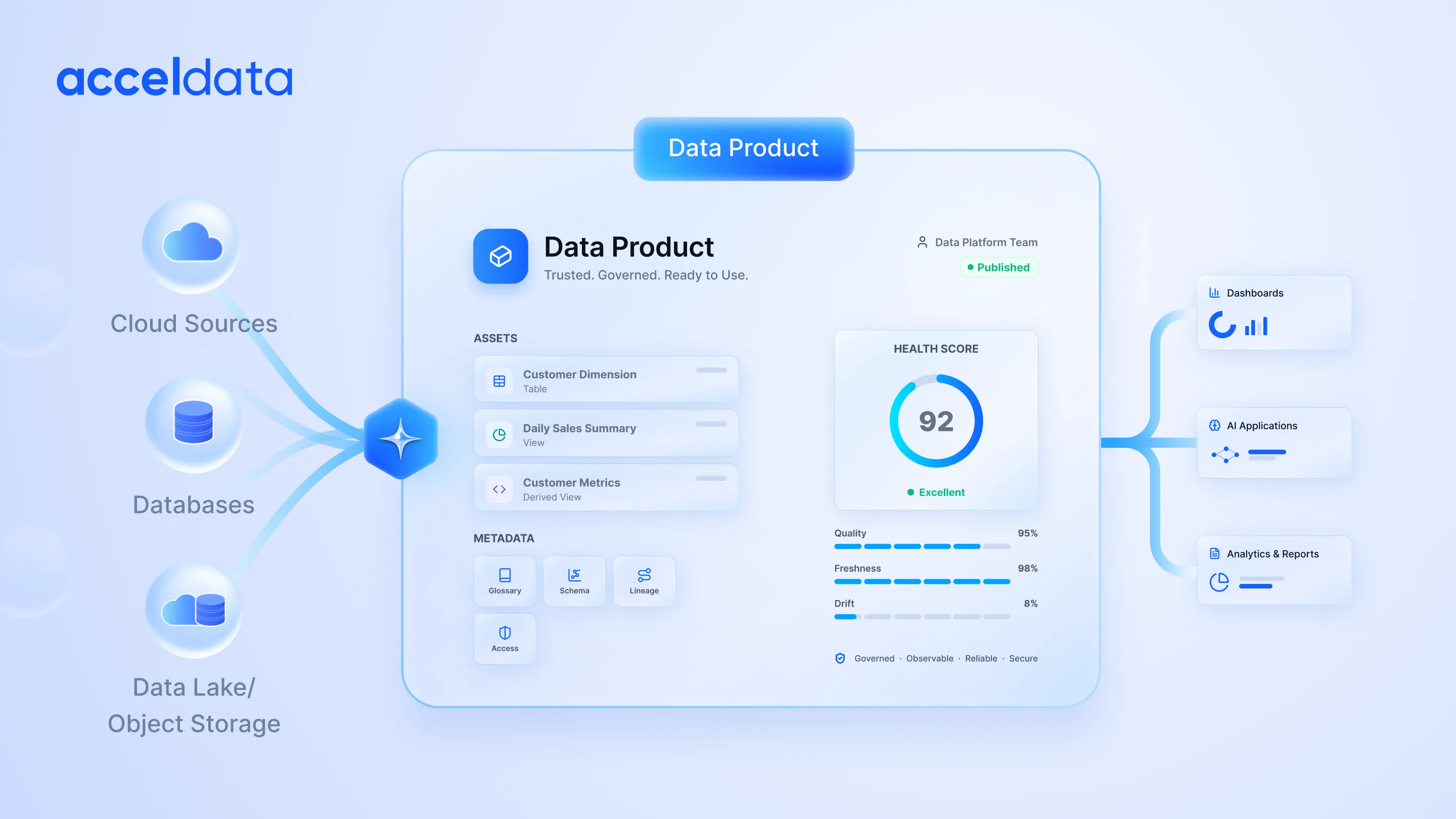
Metadata management involves organizing and governing the descriptive information about your data assets. Simply put, metadata is data about data: who created it, when it was last modified, what it contains, and how it relates to other information in your organization. A metadata management system captures these details systematically, creating a searchable inventory of your entire data ecosystem.
Technical metadata includes database schemas and data lineage paths. Business metadata covers definitions, ownership, and usage rules. Operational metadata tracks quality metrics and access patterns. Together, these elements form a comprehensive map that helps users navigate complex data environments efficiently. Without this context, even the most sophisticated data quality initiatives fail because teams cannot locate or understand the data they need to manage.
Why Metadata Management is Essential for Smarter Data Management
The explosion of data sources and formats makes manual tracking impossible. Modern enterprises juggle structured databases, unstructured documents, streaming data, and cloud storage across multiple platforms. This complexity demands automated solutions that can capture, organize, and maintain metadata at scale.
Enhancing data governance
Data governance failures often stem from a lack of visibility rather than a lack of policies. A metadata management platform provides the transparency to enforce governance standards consistently. By maintaining clear records of data ownership, access permissions, and usage patterns, these tools transform governance from a reactive scramble into a proactive discipline.
Poor data quality costs organizations millions of dollars annually, and governance gaps contribute significantly to these losses. Strengthening data governance helps reduce this impact by enabling complete data lineage tracking, clear visibility into transformation logic, and automated audit trails that support compliance. When regulators inquire about data-handling practices, well-managed metadata provides instant, accurate responses—eliminating the need for lengthy manual investigations.
Optimizing data discovery
Finding the right data should take minutes, not days. Tools for metadata management create searchable catalogs where users can locate datasets through business terms rather than technical jargon. A marketing analyst searching for "customer churn data" finds relevant tables instantly, complete with descriptions, quality scores, and usage examples.
These discovery capabilities extend beyond simple search. Intelligent recommendation engines suggest related datasets based on previous queries. Automated profiling reveals data distributions and anomalies. Collaborative features let users share insights and rate data usefulness. This reduces data discovery time, allowing analysts to focus on analysis work rather than data hunting.
Ensuring data quality
Poor data quality creates cascading problems throughout organizations. Metadata management directly addresses this challenge by providing continuous visibility into data health metrics. Quality scores, completeness percentages, and anomaly alerts become standard metadata attributes that guide users toward trustworthy sources.
Best metadata management tools integrate with data observability platforms to monitor quality in real time. They track schema changes that might break downstream processes, identify stale data that needs refreshing, and flag inconsistencies across systems. Early detection stops errors before downstream reports and analytics are affected.
How to Leverage Metadata Management Tools for Smarter Decisions
Smart metadata usage goes beyond passive documentation. Leading organizations actively leverage metadata to automate processes, enhance security, and accelerate analytics. Organizations benefit most when they use metadata actively for automation and insights, not just compliance documentation.
Automating data classification and tagging
Manual data classification cannot scale with modern data volumes. Consider a healthcare provider receiving thousands of patient records daily. Their metadata management tool would automatically scan incoming files, identify personal health information through pattern recognition, and apply HIPAA-compliant tags. The system would classify lab results differently from appointment schedules, ensuring each data type receives appropriate handling.
A retail company processing customer transactions would benefit similarly. Their tool would detect credit card numbers in payment logs and tag them for PCI-DSS compliance. Product SKUs would receive inventory classifications, while customer emails would trigger privacy flags. This automation would reduce classification time from days to seconds while improving accuracy through consistent rule application.
Improving data security and compliance
Security teams need immediate visibility into sensitive data locations. A financial services firm would use metadata tools to maintain real-time inventories of all customer account data. When a new privacy regulation emerges, they would query metadata to identify affected systems within hours rather than conducting month-long manual audits.
A multinational corporation would leverage metadata for cross-border compliance. Their tool would track which customer data resides in which country, ensuring GDPR compliance for European data while meeting different requirements for Asian markets. Access logs captured as metadata would provide instant audit trails when regulators request proof of data handling practices. Data integrity practices would ensure these compliance standards remain intact as data moves between regions.
Boosting analytics and reporting
Metadata provides the background information needed to interpret data correctly. A manufacturing company analyzing production efficiency would benefit from metadata documenting measurement methods, sensor calibration dates, and known equipment limitations. Analysts would understand that efficiency drops on Mondays might reflect measurement quirks rather than actual performance issues.
An e-commerce platform optimizing recommendation algorithms would use metadata to track model training data sources, feature engineering steps, and performance metrics. When recommendations underperform, data scientists would quickly identify whether the issue stems from stale training data, missing features, or algorithm limitations. This transparency would accelerate troubleshooting and improve AI and machine learning initiatives.
Choosing the Right Metadata Management Tool
Selecting appropriate metadata tools requires balancing current needs with future scalability. The market offers numerous options, from basic cataloging tools to comprehensive platforms with AI-driven capabilities. Success depends on matching tool capabilities to organizational maturity and objectives.
Key features to look for
Essential capabilities for any metadata management platform include:
- Automated discovery across databases, files, APIs, and streaming sources
- Business-friendly search allowing natural language queries
- Complete lineage tracking from data creation through consumption
- Flexible integration via APIs and pre-built connectors
- Role-based access controls for metadata security
- Version control to track metadata changes over time
- Collaboration features enabling crowdsourced documentation
- Quality metrics displaying freshness, completeness, and accuracy scores
- Scalable architecture handling millions of metadata objects
- AI-powered classification minimizing manual tagging effort
Advanced platforms differentiate through anomaly detection capabilities, natural language interfaces, and real-time synchronization. The best metadata management tools balance comprehensive features with usability, ensuring both data engineers and business analysts can contribute to metadata quality.
Top metadata management tools
The metadata management market offers diverse solutions for different organizational needs. Below are leading platforms with their key differentiators and ideal use cases.
Each platform brings unique strengths. Consider how tools connect with existing systems, match team skills, and address your specific needs.
Agentic Data Management: The Next Evolution with Acceldata
Traditional metadata management required constant manual updates and maintenance. Acceldata's agentic data management platforms use AI agents to automate these tasks intelligently. These agents continuously discover new data sources, update metadata based on usage patterns, identify quality issues proactively, and even suggest optimizations.
Acceldata's agentic approach transforms metadata from a static catalog into a dynamic, self-improving system. AI agents work collaboratively to maintain metadata accuracy while reducing manual overhead.
The Data Quality Agent ensures metadata reflects actual data conditions. The Data Profiling Agent updates statistical metadata automatically. This autonomous approach delivers the comprehensive metadata coverage enterprises need without the traditional maintenance burden. As a result, you can maintain accurate, up-to-date metadata coverage across enterprise systems.
Ready to unlock the power of metadata management? Contact Acceldata to explore how our metadata management tools can help you streamline your data operations and drive smarter decisions. Request a demo today.
FAQs About Metadata Management
1. What is metadata management, and why is it important for data governance?
Metadata management organizes descriptive information about data assets, including ownership, definitions, and lineage. It enables data governance by providing visibility into data usage, enforcing access controls, and maintaining audit trails for compliance.
2. How do metadata management tools improve data discovery and accessibility?
These tools create searchable catalogs where users find data through business terms rather than technical names. They provide context about data quality, usage examples, and relationships, reducing search time from hours to minutes.
3. What are the key benefits of using metadata management tools for data quality?
Metadata tools track quality metrics continuously, flag anomalies automatically, and document known issues. This visibility helps teams identify trustworthy data sources and avoid using outdated or inaccurate information in critical decisions.
4. Can metadata management tools help in ensuring compliance with data regulations?
Yes, they map regulatory requirements to specific datasets, track data lineage for audit purposes, and demonstrate compliance through automated reporting. This systematic approach reduces compliance costs and regulatory risks significantly.
5. How do metadata management tools integrate with other data management systems?
Modern tools offer APIs and pre-built connectors for databases, data warehouses, ETL platforms, and analytics tools. They synchronize metadata automatically, ensuring consistency across the entire data ecosystem without manual intervention.


.png)