




.svg)




You process millions of sensitive records daily, but a single data quality error could trigger regulatory fines exceeding $1 billion. Global regulatory penalties reached $10.5 billion in 2023, with data governance failures and financial crime accounting for the majority of violations.
When compliance violations can bankrupt your business overnight, data quality and governance bundles become mandatory infrastructure for regulated industry data management.
What is a Data Quality and Governance Bundle?
Fragmented data management tools create dangerous compliance gaps that leave you vulnerable. You need to evaluate whether your current systems actually protect your organization or merely create false confidence in your regulated data governance approach.
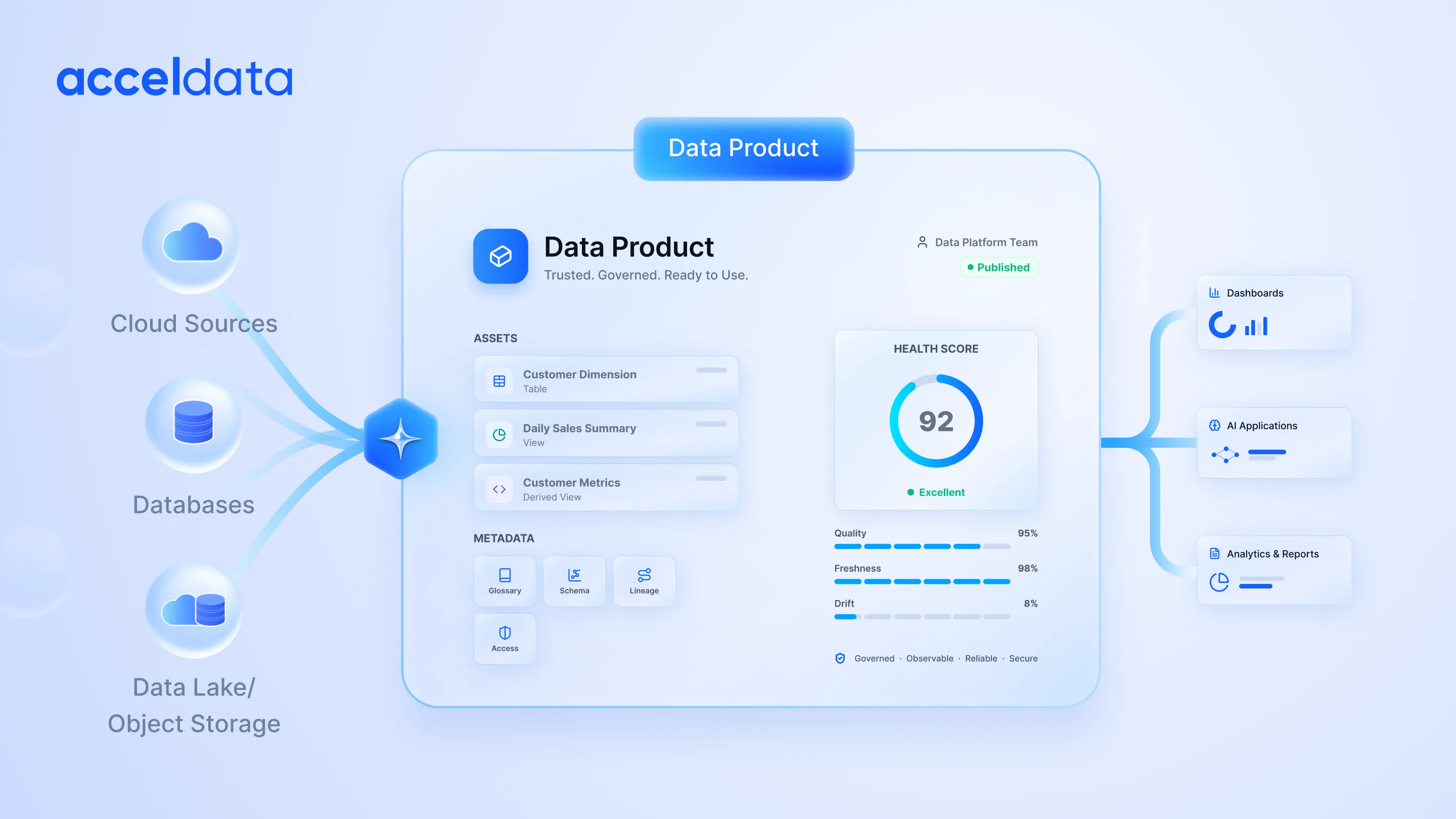
A data quality and governance bundle combines multiple data management capabilities into a unified platform designed specifically for regulated sectors. Instead of juggling six different vendors for quality checks, lineage tracking, and compliance data management, you consolidate everything into one integrated system.
Modern bundles consolidate data profiling, policy enforcement, compliance tracking, data lineage tools, and compliance monitoring that previously required separate contracts. Policy enforcement mechanisms translate regulatory requirements like GDPR, HIPAA, or SOX into automated workflows. Real-time monitoring systems detect anomalies and policy violations as they occur, enabling immediate intervention.
By unifying these capabilities, you eliminate coordination overhead and integration challenges. The question becomes whether these promised benefits actually materialize in practice or remain vendor slideware.
Key Benefits of a Bundle for Regulated Industries
While vendors promise transformation, here's what actually changes in your day-to-day operations. These five concrete areas show where integrated governance and compliance solutions consistently outperform fragmented tools.
Regulatory compliance
Integrated bundles replace reactive monthly scrambles with proactive daily monitoring. You gain visibility across all data touchpoints, eliminating blind spots where violations typically hide. Automated policy enforcement ensures consistent application of regulatory requirements, reducing human error significantly.
Pre-built templates for GDPR, HIPAA, SOX, and PCI DSS translate complex legal requirements into technical specifications. Your system tracks adherence continuously rather than just before audits, generating documentation in formats that regulators actually accept without additional formatting.
Data accuracy and integrity
Poor data quality for regulated industries creates cascading compliance failures across your organization. Inaccurate customer records lead to KYC violations, incomplete patient data results in HIPAA breaches, and faulty sensor readings trigger environmental penalties.
Building a data quality strategy within integrated bundles addresses these risks by implementing validation rules at every entry point. Data integrity solutions detect and correct errors at ingestion, preventing contamination of downstream systems while standardization ensures consistency across disparate sources.
Operational efficiency
Fragmented tools waste enormous time as teams reconcile conflicting reports from different systems and hunt for compliance evidence across multiple platforms. Your compliance team generates one set of numbers while quality produces another, leaving everyone uncertain which data to trust.
Unified bundles provide single dashboards displaying both quality metrics and compliance status simultaneously. Automated workflows reduce manual intervention in routine tasks. When you fix a data issue, integration ensures compliance records update automatically without duplicate effort.
Risk mitigation
Most regulatory violations stem from undetected data issues that compound over time, remaining hidden until expensive audits reveal them. Anomaly detection capabilities in modern bundles identify these risks immediately rather than months later.
Machine learning algorithms trained on your specific data patterns reduce false positives while ensuring genuine issues surface promptly. Your team investigates 10 real problems instead of wasting time on 1,000 false alarms.
Unified platform advantages
Consolidation delivers benefits beyond operational simplicity by ensuring consistent policy application across all data domains. Centralized governance reduces vendor management complexity and licensing costs significantly.
You can correlate quality metrics with compliance outcomes, discovering patterns like 80% of violations originating from three specific data sources. This insight enables root cause analysis that prevents future violations rather than just documenting past ones.
These benefits only materialize when you select bundles with features matching your specific regulated industry data governance context.
Features to Look For in a Data Quality & Governance Bundle
Every vendor claims comprehensive coverage, but these six capabilities distinguish real data integrity solutions from expensive disappointments that fail during implementation.
Automated data validation and cleansing
Systems that only flag errors after database entry are already too late. You need validation that prevents bad data from entering your systems initially. Automated cleansing should handle duplicates, formatting inconsistencies, and missing values without manual intervention.
Contextual intelligence goes beyond simple rule checking to catch business logic violations. A birth date of 01/01/1900 might be technically valid, but obviously incorrect for new customer applications in regulated industry data management.
Regulatory compliance tools
Compliance requirements change quarterly as regulators update expectations. Pre-built libraries should cover major standards while allowing industry-specific customization. Automated reporting must generate documentation in exact formats regulators require for compliance data management.
When GDPR Article 30 updates record-keeping requirements, your system should incorporate changes automatically rather than requiring six-month implementation projects.
Data lineage tracking
Auditors frequently demand that you demonstrate exactly how customer data moved from system A to report B. Your bundle must provide clear visual answers without manual investigation.
Understanding data observability fundamentals helps evaluate whether lineage capabilities meet regulatory standards. Impact analysis prevents accidental violations by showing that changing one field affects 47 downstream reports.
Policy enforcement and workflow automation
Simple IF-THEN rules cannot handle regulations with nested conditions, temporal logic, and exceptions. Your policy engine must support complex scenarios while integrating with identity management for consistent access control in regulated data governance.
Policy management features must maintain version control, tracking which policy was approved, which action was taken, and on which date. Auditors frequently ask about two-year-old decisions.
Real-time monitoring & alerts
Batch monitoring running nightly misses violations occurring during business hours. Configurable thresholds let teams prioritize critical issues while filtering routine notifications that create alert fatigue.
Predictive analytics in compliance monitoring tools identify degrading quality trends before they trigger violations. Early intervention costs hundreds, while audit-discovered issues cost hundreds of thousands.
Scalability considerations
Data volumes double every 18 months while compliance requirements expand faster. Solutions must scale horizontally without performance degradation. Cloud-native architectures provide better elasticity than traditional deployments.
Global organizations face additional complexity. EU data must remain on EU servers for GDPR compliance, yet compliance dashboards need unified visibility. Hybrid deployments balance these competing requirements for governance and compliance solutions.
How to Select the Right Bundle
Vendor demonstrations blur together, but implementation results vary dramatically. These five evaluation criteria separate successful deployments from expensive failures in regulated industry data management.
Assess compliance needs
Catalog every regulation affecting your organization, including federal, state, and international requirements. Document specific mandates around quality, retention, access controls, and reporting frequencies for compliance data management.
Build a compliance matrix showing GDPR requires portability within 30 days, while CCPA allows 45 days. Map each requirement to automated features rather than manual processes that fail audits.
Evaluate data volume and complexity
Quantify current volumes and project realistic five-year growth based on historical trends. Consider variety alongside volume: structured databases, unstructured documents, streaming feeds, and third-party data each pose unique challenges to data quality in regulated industries.
Your bundle must accommodate existing workflows without forcing disruptive process changes that organizations resist.
Check integration capabilities
Test native connectors for every platform from legacy mainframes to cloud services. Where connectors don't exist, evaluate API flexibility for custom integrations.
Security integration deserves particular scrutiny. Data pipeline integration ensures governance extends across your entire ecosystem.
Vendor expertise evaluation
Demand references from organizations in your exact industry that face similar challenges. Vendors without SOC 2 certification shouldn't advise on compliance matters for regulated data governance.
You need support teams that understand both technical troubleshooting and your specific regulatory requirements.
ROI considerations
Calculate total ownership costs, including licensing, implementation, training, maintenance, and infrastructure upgrades. Hidden costs emerge during integration phases.
Balance against measurable benefits like reduced audit preparation time and fewer violations. Comprehensive governance implementations show measurable improvements in decision-making speed and accuracy.
Best Practices for Implementation
Half of bundle implementations fail to deliver promised benefits. These four practices distinguish successful deployments from expensive lessons in regulated industry data management.
Map regulatory requirements
Create detailed mappings showing how regulations translate into quality rules, policies, and monitoring thresholds. Involve compliance officers with an understanding of regulatory nuances alongside technical staff knowing implementation feasibility.
This collaboration prevents misalignments where one misunderstood requirement becomes a million-dollar fine.
Centralize oversight
Establish a unified governance committee combining stakeholders, IT, and compliance experts. Define clear roles specifying who approves changes, handles exceptions, and oversees audits for governance and compliance solutions.
Document every decision with a clear rationale. "Bob approved it" won't protect you from regulatory penalties.
Automate where possible
Identify high-volume repetitive tasks consuming team time. Start with straightforward processes, building confidence before tackling complex workflows in compliance monitoring tools.
Automation capabilities should handle 80% of cases cleanly rather than generating 80% exceptions requiring manual intervention.
Continuous monitoring and improvement
Implement feedback loops capturing lessons from incidents and audits. Track KPIs, including violation rates, audit scores, processing times, and quality metrics for data integrity solutions.
Planning capabilities transform these metrics into actionable improvements. Regular optimization ensures your bundle evolves alongside changing regulations.
Transform Your Data Governance with Acceldata's Agentic Platform
Traditional platforms show problems after they occur, leaving you to investigate causes and implement fixes while violations accumulate. Passive detection hasn't prevented billion-dollar compliance failures in regulated data governance.
Acceldata's agentic data management platform moves beyond monitoring to active problem-solving using AI agents trained on your specific regulatory context. The platform combines automated validation, policy enforcement, and compliance tracking with contextual intelligence to understand your unique regulated industry data management environment.
Specialized agents for quality, lineage, profiling, and pipeline management work together seamlessly. You prevent tomorrow's violations rather than documenting yesterday's failures with true data integrity solutions.
Book a demo with Acceldata today to see how agentic data management transforms reactive compliance into proactive governance excellence.
FAQs About Regulated Industry Data Governance
1. What is a data quality and governance bundle for regulated industries?
A data quality and governance bundle integrates validation, cleansing, policy enforcement, compliance tracking, and monitoring into a unified platform for regulated sectors. These bundles address challenges in maintaining data integrity while ensuring continuous compliance through automated workflows.
2. Why is an integrated bundle important for compliance and operational efficiency?
Integrated bundles eliminate gaps between quality and governance tools while ensuring consistent policy application. This improves compliance accuracy through automation while simplifying vendor management and reducing complexity in maintaining multiple systems.
3. What features should I look for in a data quality and governance solution?
Priority features include automated validation, pre-built regulatory templates, comprehensive lineage tracking, sophisticated policy engines, real-time monitoring with predictive analytics, and cloud-native scalability. Solutions must offer robust integration and adapt quickly to evolving regulations.
4. How can a bundle help maintain data integrity and regulatory compliance?
Bundles maintain integrity through continuous validation at entry points, automated correction, and standardization across systems. They translate regulatory requirements into executable policies, automate enforcement, track violations in real time, and generate audit-ready documentation satisfying inspections.
5. What best practices should be followed when implementing such a solution?
Key practices include mapping regulatory requirements to technical specifications precisely, establishing centralized oversight with defined roles, systematically automating repetitive tasks, and implementing continuous monitoring with data-driven improvements. Involve technical and compliance teams throughout to ensure coverage aligning with actual operations.


.png)