



.svg)



In 2023, as big firms began integrating Generative AI into their systems, data complexity surged, and so did the risks. GDPR fines hit billions, and high-profile breaches like Meta’s $1.2 billion penalty made headlines. By 2025, these stakes have only risen, with GDPR fines surpassing $3 billion in the EU alone.
While the data powers growth and innovation, a fragmented data platform and data governance can create blind spots, exposing your organization to compliance risks, inefficiencies, and reputational damage.
If you’re bogged down by bad, complex data, here’s how you can harness data governance to boost your business by safeguarding data integrity and enabling seamless, AI-ready operations.
What is a Data Governance Platform?
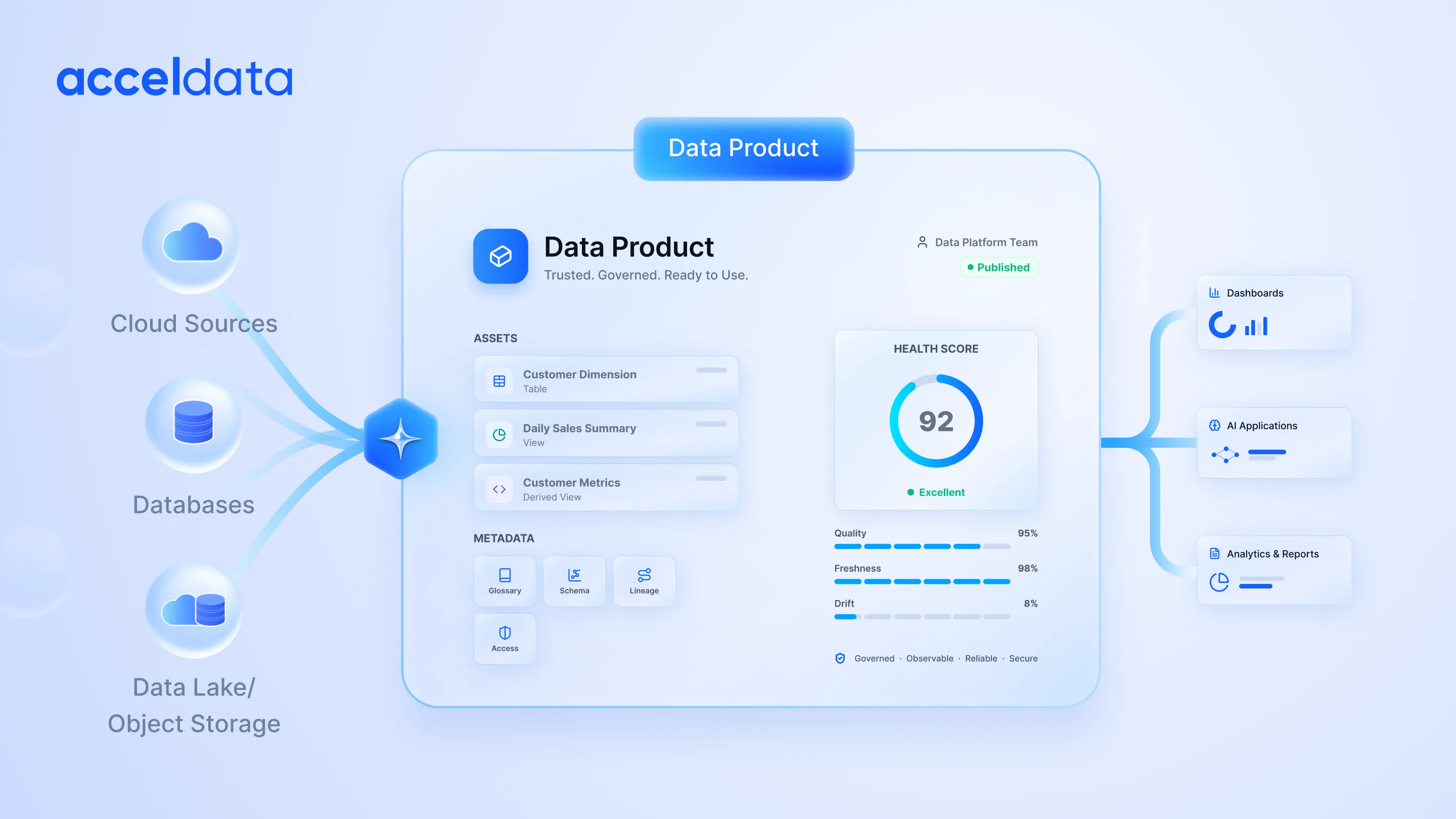
A data governance platform is a centralized solution that brings structure and accountability to the way your organization manages data. It unifies policies, processes, and tools, giving you complete data observability while ensuring it’s accurate, secure, and compliant.
At its core, a data governance platform helps you:
- Catalog and classify data to build a clear inventory of assets.
- Enforce policies automatically, reducing manual oversight.
- Monitor compliance with regulations like GDPR, CCPA, and HIPAA.
- Track data lineage to understand how data evolves over time.
- Improve data quality through cleansing, validation, and auditing.
This foundation enables your teams to collaborate confidently, knowing every decision is based on trusted, well-governed data.
How a Data Governance Platform Enhances Operations
Your enterprise, like most modern businesses today, generates massive volumes of data across disparate systems: cloud apps, ERP platforms, CRMs, and more. Without centralized governance solutions, your teams may spend valuable time hunting for reliable data, while decisions are delayed or based on incomplete information. A data governance platform solves these challenges by bringing order to the entire data lifecycle via data automation.
Streamlining data management
Instead of managing data in isolated silos, effective data platform governance will integrate datasets across multiple sources—from on-premises databases to cloud-based warehouses. The best data governance software must have the following basic features to help you reduce data discovery and accessibility times.
- Automated cataloging and classification ensure that every data asset is discoverable and tagged appropriately.
- Role-based access controls streamline permissions, ensuring only the right teams have access to sensitive data.
- Policy-driven workflows replace error-prone manual processes, allowing compliance rules to run automatically in the background.
Boosting operational efficiency
Manual governance processes are slow, inconsistent, and costly. Automated data governance platforms, on the other hand, will reduce your administrative overhead and accelerate decision-making.
Here’s how data governance tools help you gain faster, clearer insights:
- Real-time visibility into data pipelines, which helps teams identify bottlenecks before they impact operations.
- Centralized policies eliminate redundant workflows and standardize governance across departments.
- A single source of trusted data reduces friction between IT, compliance, and business stakeholders.
Ensuring data accuracy
Inconsistent or poor-quality data erodes trust at every level of an organization. On the flip side, good governance solutions safeguard your brand reputation by ensuring your decisions are based on reliable sources. Here’s how data platform governance ensures data quality assurance in operational processes.
- Automated validation detects errors or anomalies at the point of ingestion.
- Continuous monitoring flags discrepancies across systems in real time.
- Cleansing tools correct data at the source, ensuring downstream analytics remain accurate.
While a data governance platform streamlines data management, boosts operational efficiency, and ensures data accuracy, it also plays a critical role in navigating the complexities of compliance. As regulations become increasingly stringent, AI-driven data platforms play a significant role in maintaining a robust governance framework.
Data Governance Platform for Enhanced Compliance
As regulations around data privacy and security continue to grow more complex, staying compliant has become a baseline requirement. This is where using data governance for compliance can give you a competitive edge, thanks to its agile, automated, and centralized capabilities.
Meeting regulatory requirements
If your business is operating across different regions or industries, keeping up with varying data privacy and security regulations can be challenging. Even for companies focused on one country, regulations can often be complex due to their constantly evolving nature. A data governance platform makes it easier for you to stay compliant by:
- Centralizing compliance rules: Ensures that regulations around data retention, privacy, and access are applied consistently, whether you're managing data locally or internationally.
- Automating critical processes: Streamlines tasks like consent management and data retention, cutting down on the risk of human error and ensuring compliance is maintained without extra manual effort.
- Providing real-time compliance dashboards: Gives executives and compliance teams a clear view of how well the business is meeting regulatory requirements, so they can take quick action when needed.
Audit trails and transparency
Manual reporting processes can be a nightmare during audit season. Automated data governance platforms can come in handy here by generating detailed audit trails automatically, thus providing a transparent record of every data-related action across your organization:
- Data lineage tracking shows exactly where the data originated, how it’s been transformed, and who has accessed it.
- Time-stamped logs support investigations and prove adherence to regulatory requirements.
- Executives gain instant insights into compliance posture, avoiding last-minute scrambles during audits.
Minimizing risk
Compliance isn’t just about avoiding fines; it’s also about proactively managing risk. Governance platforms reduce your exposure by:
- Continuously monitoring data access and usage patterns to flag suspicious activity.
- Enforcing least-privilege access models, ensuring sensitive data is only accessible to authorized individuals.
- Alerting teams to potential breaches or violations before they escalate into costly incidents.
Now that we've covered how governance platforms strengthen compliance, let's look at the core benefits they can deliver for your organization.
Key Benefits of a Data Governance Platform
A modern enterprise data governance platform delivers three key benefits that directly boost your enterprise performance: high-quality, trustworthy data; faster, more accurate decision-making; and enhanced collaboration across teams. These outcomes help drive operational efficiency, reduce compliance risks, and ensure everyone in your organization works from a single, reliable data source.
Improved data quality
Data that’s incomplete, outdated, or inconsistent can throw off decision-making and lead to wasted time and resources for your organization. A good data governance platform helps prevent these problems by checking data quality throughout your workflows, catching and fixing issues before they become bigger problems.
Key capabilities include:
- Automated validation to flag anomalies during ingestion.
- Cleansing and enrichment tools to correct inaccuracies and fill data gaps.
- Real-time monitoring to detect quality issues before they affect analytics or reporting.
Better decision-making
Executive decisions are only as good as the data they’re based on. Without governance, teams waste time debating which data is accurate or whether it complies with regulations.
Governance platforms solve this by:
- Providing a single source of truth, so every department works from consistent, validated data.
- Delivering role-based dashboards tailored to each business unit’s needs.
- Embedding regulatory context into insights, ensuring compliance while accelerating decisions.
Increased collaboration
Siloed data creates friction between teams and slows innovation. A governance platform acts as a centralized hub, aligning departments and fostering collaboration.
It does this by:
- Standardizing data definitions and governance policies across the organization.
- Providing shared, secure access to curated datasets.
- Enabling real-time collaboration between business, compliance, and IT teams.
These benefits highlight why robust enterprise data governance is essential for your organization. However, not all platforms will be the right fit. The next step is understanding how to choose the best data governance software for your organization’s unique needs.
Choosing the Best Data Governance Software
Selecting the right data governance platform is critical because it determines how effectively you can govern, secure, and scale your data. The ideal platform aligns with your business goals, integrates seamlessly with existing systems, and empowers your teams to manage compliance and operational processes with ease. Making the wrong choice can create new silos, increase costs, and undermine trust in your data.
Key considerations
When evaluating governance platforms, prioritize these factors to ensure the solution delivers long-term value:
- Scalability: Support for growing data volumes and evolving business needs without performance bottlenecks.
- Integration capabilities: Smooth connectivity with existing tools like data warehouses, CRMs, BI platforms, and cloud services.
- User experience: An intuitive interface that drives adoption across technical and non-technical teams.
- Automation: Built-in automation for policy enforcement, compliance tracking, and data quality management to reduce manual work.
- Security and privacy controls: Role-based access control (RBAC), encryption, and proactive monitoring to safeguard sensitive data.
- Vendor support and ecosystem: Ongoing training, responsive support, and a thriving partner network to future-proof your investment.
Top data governance platforms
The market offers several leading solutions, each excelling in different areas. Here’s a high-level comparison, so you can make an informed decision:
While you can get all these features spread across these platforms, you don't need to spend on multiple data management platforms.
Acceldata offers all the features natively. It integrates all the key features like data cataloging, integration, lineage tracking, collaboration tools, and scalable governance into one unified platform, offering a comprehensive, end-to-end approach.
This eliminates the need for disjointed systems, reduces overhead, and simplifies your data management platform, all while providing deeper insights and better governance at scale.
Transforming Data Governance into a Strategic Advantage with Acceldata
Every company is now an AI and data company, directly or indirectly. But when your organization becomes AI-driven, it’s essential to ensure your data remains accurate and reliable to keep operations running smoothly. This starts with strong governance frameworks and a robust data governance platform to manage it all.
Acceldata provides a unified, enterprise-grade platform that integrates observability, automation, and compliance. It offers real-time visibility into data pipelines, automates complex policy enforcement, and ensures data quality at scale—all the while reducing risk and improving collaboration.
With Acceldata, your organization can:
- Save costs by consolidating multiple tools into one platform, eliminating the need for separate subscriptions, training, and dedicated staff.
- Improve efficiency by streamlining workflows and eliminating silos, enabling teams to work faster and more collaboratively.
- Reduce risk with proactive monitoring, automated audit trails, and enhanced data governance to maintain compliance and prevent errors.
- Foster better collaboration by providing teams with clean, consistent data to make confident decisions.
In conclusion, Acceldata’s all-in-one solution simplifies data governance, cutting costs, boosting productivity, and minimizing risk. It sets your organization up for success in an AI-driven world.
Ready to harness the power of a data governance platform? Contact Acceldata to explore how our powerful data governance platform can help streamline your operations and improve data quality across your organization.
FAQs
1. What is a data governance platform, and why is it important for businesses?
A data governance platform is a centralized system that helps organizations manage, monitor, and protect their data across its entire lifecycle. It provides policies, procedures, and tools to ensure data is accurate, consistent, secure, and accessible. For businesses, this is crucial because high-quality, well-governed data supports better decision-making, reduces risks, ensures compliance with regulations, and drives overall operational efficiency.
2. How can a data governance platform improve operational efficiency?
By providing a single source of truth and standardized processes for handling data, a data governance platform reduces the time employees spend searching for or validating information. Automated workflows, data lineage tracking, and clear ownership assignments minimize errors, prevent duplication, and streamline collaboration across teams, allowing organizations to make faster, data-driven decisions.
3. What are the core features of a data governance platform?
Core features of a data governance platform should include:
- Data cataloging and metadata management: Organizes and classifies data assets for easy discovery.
- Data lineage tracking: Shows the origin, movement, and transformation of data.
- Data quality monitoring: Identifies and resolves inconsistencies, duplicates, or errors.
- Policy enforcement and workflow management: Ensures compliance with internal and external rules.
- Access control and security: Protects sensitive data while allowing appropriate usage.
- Reporting and analytics: Provides insights on data usage, quality, and compliance.
Look for platforms like Acceldata that offer all of these features together, so you don’t have to spend on multiple platforms and their integration.
4. How does a data governance platform help ensure regulatory compliance?
A data governance platform tracks data access, usage, and modifications, creating a clear audit trail for regulators. It enforces data protection policies, monitors sensitive data, and helps maintain compliance with laws such as GDPR, HIPAA, and CCPA. Automating compliance reporting and controlling who can access or modify data reduces the risk of violations and potential fines.
5. What benefits does a data governance platform bring to data quality management?
A data governance platform ensures that data is accurate, complete, consistent, and timely. By automatically detecting anomalies, enforcing validation rules, and maintaining clear data ownership, it improves trust in the data used for business decisions. This leads to fewer errors, better analytics outcomes, and increased confidence among stakeholders that the data is reliable.


.png)