.svg)



When data integrity fails, businesses make million-dollar mistakes. Companies can lose billions in market value instantly from a single data entry error.
These disasters aren't isolated incidents—57% of data professionals rank data quality as their top challenge, up from 41% just two years ago.
In this article, we'll explore how modern data quality software solutions protect against these failures and help you build a foundation of reliable, trustworthy data.
What is Data Quality Software?
Data quality software automates finding, fixing, and preventing errors across your entire data infrastructure through four essential capabilities.
Modern data quality management tools use data profiling to uncover hidden patterns and inconsistencies:
- Data cleansing to automatically fix errors and standardize formats
- Real-time validation to stop bad data before it corrupts downstream processes
- Data enrichment to fill critical gaps from trusted sources.
These integrated capabilities transform chaotic data into reliable business assets, making automated data quality management software essential as data volumes grow exponentially.
Why is Data Quality So Important?
The true cost of bad data extends far beyond IT budgets, affecting every aspect of your business from strategic decisions to daily operations. Poor data quality creates cascading failures across three critical areas:
- Impact on decision-making: Countless organizations make flawed strategic choices daily when bad data corrupts their data observability platform analytics.
- Operational efficiency: Data quality issues such as duplicates, inconsistencies, and inaccuracies disrupt business operations, reduce customer satisfaction through poor personalization or service delays, and waste resources by driving misinformed decisions and redundant efforts.
- Compliance and security: Inaccurate data creates regulatory gaps, exposing organizations to fines, while incomplete logs enable security breaches. Therefore, maintaining accurate audit trails and proving compliance is essential.
Now let's examine the specific features that separate basic quality tools from comprehensive solutions.
Key Features of the Best Data Quality Software Solutions
Leading data quality platforms share several key features that distinguish them from basic tools. Understanding these capabilities helps you evaluate solutions effectively.
- Automated data cleansing: Top data quality automation platforms use machine learning to identify and correct errors at scale, detecting patterns and fixing millions of records automatically. Advanced systems understand context, standardize addresses across formats, and catch subtle duplicates that rule-based tools miss.
- Real-time monitoring: The best solutions provide continuous monitoring that catches issues immediately through quality metrics tracking and anomaly alerts. Critical for streaming data pipelines, these platforms ensure consistency across both batch and streaming workflows.
- Data enrichment: Leading platforms automatically fill data gaps by appending demographic information, validating addresses, and adding firmographic data from authoritative sources. AI-powered processing extends enrichment to unstructured data through natural language processing and pattern-based inference.
- Integration capabilities: Native connectors for major databases, cloud platforms, and business applications ensure seamless integration. API-first architectures make data quality and governance processes part of your natural data flow rather than isolated checkpoints.
- Customizable workflows: Visual workflow builders let you create custom quality rules without coding, define validation logic, and automate remediation. Role-based access and audit trails enable collaborative quality management between data stewards and engineers.
With a clear understanding of essential features, you can now evaluate specific solutions. Let's examine how leading platforms deliver these capabilities in practice.
Top Data Quality Software Solutions for 2025
The market offers numerous data quality solutions, each with distinct strengths. Here's how leading platforms compare to help you make an informed decision.
Acceldata's data quality software
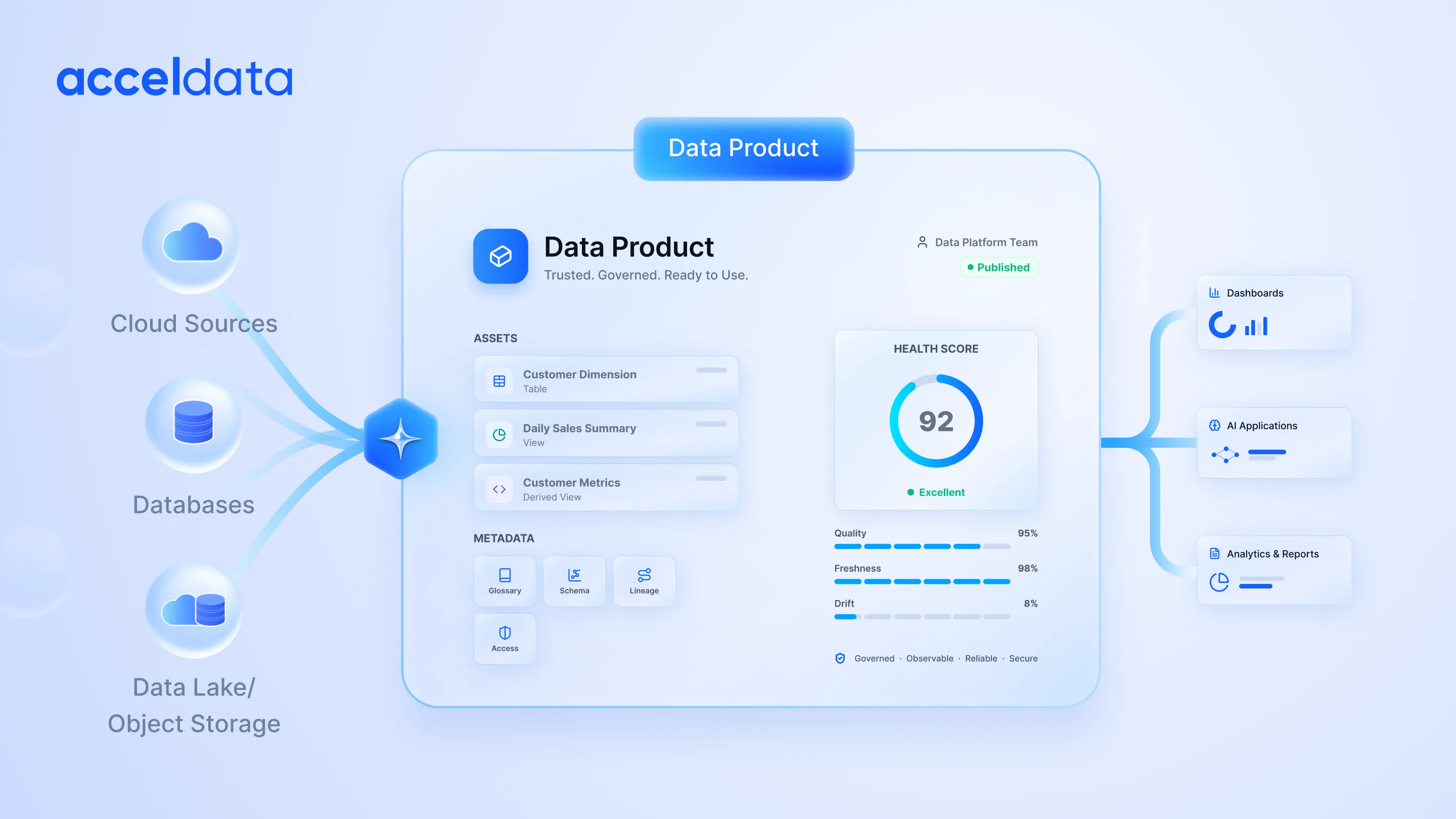
Acceldata's agentic data management platform revolutionizes data quality through autonomous AI agents that detect, understand, and resolve issues without human intervention. Unlike traditional tools that simply flag problems, Acceldata's Data Quality Agent learns from your data patterns, predicts potential issues, and takes corrective action automatically.
The platform's context-aware intelligence goes beyond detecting anomalies to explain their business impact and prioritize remediation based on downstream effects. Its AI-powered memory recalls past decisions and continuously improves, creating a self-learning data quality system that gets smarter over time.
Other leading tools
- Informatica Data Quality provides comprehensive profiling with strong legacy support, though requiring significant implementation effort.
- Talend Data Quality offers open-source flexibility with enterprise features, excelling at custom rule creation.
- Trifacta focuses on data preparation with built-in quality features through visual interfaces.
Comparison table
Understanding available options is the first step. Next is selecting the right solution for your specific needs.
How to Choose the Right Data Quality Software for Your Business
Selecting the right data quality solution requires evaluating your specific needs. Start by assessing current challenges and future requirements.
Identify your needs
Document your specific pain points in detail. Are duplicate customer records causing revenue losses? Do inconsistent product data create expensive fulfillment errors? Does poor financial data quality delay critical reporting and compliance?
Consider your ecosystem complexity carefully. Organizations with diverse data sources and hybrid cloud deployments need platforms offering broad connectivity and flexible integration options.
Scalability
Data volumes will only continue growing exponentially. Choose solutions that scale efficiently without imposing exponential cost increases as your data expands. Cloud-native architectures typically offer superior scalability compared to traditional on-premise deployments.
Evaluate performance carefully at your expected data volumes. Request detailed benchmarks for workloads similar to yours, as cost optimization becomes increasingly critical as data scales.
Ease of use
Complex tools create significant adoption barriers across your organization. Business users need intuitive interfaces they can master quickly, while engineers require powerful APIs for automation. The best solutions successfully balance simplicity with sophisticated capabilities.
Consider the learning curve for your entire team. Platforms offering comprehensive documentation, active user communities, and built-in templates significantly accelerate adoption and time-to-value.
Support and training
Vendor support quality varies dramatically between providers. Carefully evaluate response times, technical expertise levels, and support coverage hours. Global organizations require reliable 24/7 support across all time zones.
Training options should align with your team's diverse needs. Self-service resources work well for experienced technical teams, while instructor-led training benefits organizations new to data quality management. Certification programs help build internal champions who drive adoption.
Making the right choice requires thorough evaluation, but the benefits more than justify the effort. Let's explore the concrete returns you can expect from your data quality investment.
The Benefits of Using Data Quality Software
Investing in data quality software delivers measurable benefits. Understanding these advantages helps build the business case.
- Improved data accuracy: Automated checks catch errors humans miss while machine learning identifies patterns across millions of records. Continuous monitoring prevents quality degradation, leading to better outcomes, such as higher marketing conversion rates and faster financial reconciliation.
- Enhanced decision-making: Clean data enables confident decisions at every level, from executive strategy to front-line customer service. Organizations with reliable data move faster and capture opportunities competitors miss.
- Cost savings: Quality software eliminates hidden expenses from duplicate marketing spend, invalid sales leads, and excess inventory. Automation reduces manual cleaning efforts while prevention avoids costly downstream corrections.
- Increased operational efficiency: Quality data ensures automated workflows run smoothly, integrations work reliably, and reports are generated accurately the first time. Teams spend less time firefighting and more time innovating, with a dramatic increase in data pipeline reliability.
Realizing these substantial benefits requires more than just purchasing software. Success depends on following proven implementation practices that maximize adoption and long-term value.
Best Practices for Implementing Data Quality Software
Successful implementation requires far more than selecting the right technology. Follow these proven practices to maximize your investment and ensure sustainable data quality improvements.
- Set clear data quality standards: Define measurable standards before implementation, including accuracy thresholds and completeness requirements for each data domain. Customer data typically needs 99% accuracy for compliance, while marketing data might function at 95% for targeting.
- Ensure team buy-in: Data quality requires organization-wide commitment with clear accountability. Build support through quick wins on high-priority problems affecting multiple departments, then celebrate and share success stories to drive broader adoption.
- Continuous monitoring and auditing: Implement ongoing monitoring with automated alerts to catch degradation early. Create feedback loops between monitoring insights and process improvements, investigating root causes when issues recur rather than just treating symptoms.
- Train your team: Technical teams need platform expertise while business users require quality concepts education. Establish champion programs where power users support colleagues and document procedures for self-service learning.
While current solutions offer remarkably powerful capabilities, the field continues evolving at breakneck speed. Understanding emerging trends helps you select platforms that will grow and adapt with your future needs.
The Future of Data Quality Software
Data quality software evolves as new technologies emerge. Understanding trends helps select platforms with staying power.
AI and machine learning
AI fundamentally transforms data quality from reactive firefighting to proactive prevention. Machine learning models now predict quality issues before they occur, while natural language processing enables business users to define quality rules conversationally.
AI agents for data management represent the next evolutionary leap. These autonomous systems continuously learn from your data patterns, understand business context deeply, and take corrective actions completely independently.
Integration with advanced technologies
Modern quality platforms increasingly integrate with cutting-edge technologies to expand capabilities. Blockchain technology provides immutable audit trails for compliance requirements, while IoT integration enables real-time validation of sensor data at the edge.
These integrations dramatically expand quality management beyond traditional structured databases. Organizations can now ensure consistent quality across all data types and sources, from unstructured documents to streaming sensor feeds.
Self-healing systems
The ultimate goal is fully self-healing data systems that maintain perfect quality autonomously. These advanced platforms detect issues instantly, determine root causes automatically, implement precise fixes, and prevent recurrence without human intervention. Human oversight shifts entirely to strategic governance and policy setting.
Agentic data management makes this vision a reality through sophisticated AI agents that think, learn, and act with complete independence. Early implementations demonstrate stunning reductions in manual effort while dramatically improving quality outcomes.
The future of data quality is undeniably autonomous, intelligent, and proactive. Organizations that embrace these revolutionary advances today will dominate their industries tomorrow.
Accelerate Your Data Quality Journey with Acceldata
Data quality challenges grow exponentially more complex as data volumes explode and AI adoption accelerates across industries. Traditional manual approaches and rule-based systems simply cannot keep pace with modern requirements for real-time, autonomous quality management at scale.
Acceldata's agentic data management platform completely transforms how enterprises ensure data integrity. Our AI-powered agents don't merely detect quality issues—they understand root causes, predict future problems before they occur, and autonomously implement intelligent fixes.
Ready to experience the future of autonomous data quality management? Discover how Acceldata’s data quality software solutions can enhance your data integrity and drive more accurate, actionable insights for your business. Book a demo with Acceldata today.
FAQs About Data Quality Software
What is the main function of data quality software?
Data quality software automatically identifies, corrects, and prevents errors in organizational data through continuous monitoring, validation, and cleansing.
How do I integrate data quality software with my existing data systems?
Modern platforms provide pre-built connectors for major databases, cloud platforms, and applications, plus APIs for custom integrations.
How can I measure the effectiveness of data quality software?
Track error rates, data completeness percentages, time saved on manual corrections, and business outcomes like reduced complaints or faster reporting.
What industries benefit most from data quality software?
Financial services, healthcare, retail, and manufacturing see the highest returns due to strict compliance requirements and critical data accuracy needs.


.png)