




.svg)



When was the last time a business decision was delayed because nobody trusted the data? If you're counting in hours rather than months, you're not alone. Despite 92% of enterprises having data governance programs, 40% of Fortune 1,000 data leaders can't demonstrate any measurable impact.
Meanwhile, poor data quality silently consumes up to 40% of IT budgets. Most governance programs fail because they focus on documentation over outcomes.
This article examines why traditional governance fails and provides practical steps to build frameworks that deliver real results: from improving decision-making to ensuring compliance without creating bureaucratic bottlenecks.
What is Enterprise Data Governance?
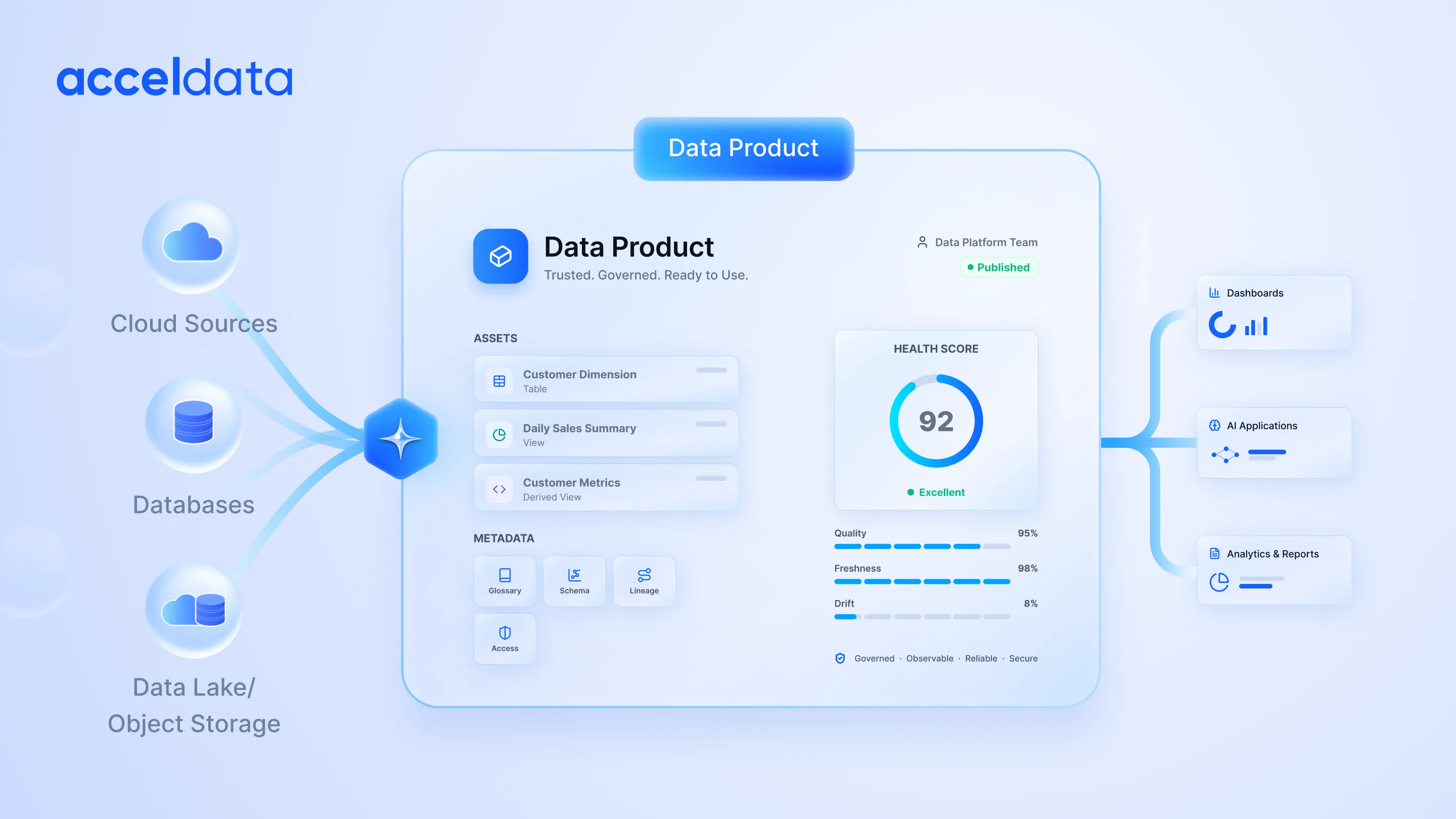
Enterprise data governance is the systematic management of data availability, usability, integrity, and security across an organization. It establishes clear rules about who can access what data, when, and for what purpose.
A strong enterprise data governance framework includes five core components. First, data stewardship assigns clear ownership of data assets to specific individuals or teams. Second, comprehensive policies define how data should be collected, stored, and used.
Third, quality management processes ensure data remains accurate and reliable. Fourth, security controls protect sensitive information from breaches and unauthorized access. Fifth, technology tools automate governance tasks and monitor compliance.
These components work together to create a unified system. Without this integration, organizations struggle with conflicting data definitions, inconsistent quality standards, and compliance gaps that expose them to regulatory risk.
The Importance of Data Governance for Decision-Making
Poor data quality costs organizations time and money while undermining strategic decisions. When governance fails, executives make choices based on incomplete or inaccurate information.
Improved data quality forms the foundation of trusted decision-making. Organizations with mature governance programs typically achieve significantly higher accuracy in their data quality metrics compared to those without governance. This improvement directly impacts business outcomes. A retailer struggling with inventory data would see significant reductions in stockouts and operational costs by implementing proper data governance controls.
Better insights and analytics emerge when data is properly governed. Clean, well-organized data enables advanced analytics and AI initiatives that would otherwise fail. Financial services firms using governed data for risk analysis and anomaly detection would experience faster model development and more accurate predictions. These improvements would result in avoided losses and more informed investment decisions.
Faster, informed decisions become possible when decision-makers trust their data. Instead of spending most of their time searching for and validating data, executives can focus on analysis and action. Companies with strong governance frameworks typically reduce decision-making time significantly while improving decision accuracy.
Effective governance reduces costs, speeds decisions, and prevents compliance failures. Organizations that invest in comprehensive enterprise data governance tools see returns through better decisions, reduced risks, and improved operational efficiency.
Strengthening Compliance through Data Governance
Regulatory requirements continue to multiply, with fines for non-compliance reaching unprecedented levels. Organizations need governance frameworks that adapt to evolving regulations while maintaining operational efficiency.
Ensuring regulatory compliance requires continuous monitoring and enforcement of data policies. Modern enterprise data governance online platforms automatically track data usage, flag potential violations, and maintain audit trails. Healthcare organizations managing patient data under HIPAA would face severe penalties without proper governance controls. Similarly, financial institutions handling customer information must demonstrate compliance with multiple overlapping regulations.
Audit and accountability create transparency throughout the data lifecycle. Effective governance establishes clear data lineage tracking from source to consumption. When regulators request documentation, organizations with mature governance can quickly provide comprehensive audit trails. This capability proves especially critical during investigations or compliance reviews.
Minimizing risks extends beyond regulatory compliance to operational resilience. Data breaches, quality issues, and availability problems all threaten business continuity. Governance frameworks that incorporate real-time data observability would help organizations detect and resolve issues before they impact operations or trigger compliance violations.
Proper governance helps organizations avoid regulatory fines and maintain their operating licenses. Investment in robust frameworks pays dividends through avoided fines, reduced audit costs, and improved reputation.
How to Strengthen Your Enterprise Data Governance
Building effective governance requires strategic planning and systematic implementation. Let's follow a global retail chain as it transforms its fragmented data practices into a unified governance framework.
Step 1: Assess current state and define objectives
The retail chain would begin by documenting existing data practices across all departments. They would discover that marketing maintains customer data in one system, while finance tracks the same customers differently, creating inconsistencies. By mapping these disconnections, they would identify that poor data quality costs them millions in failed marketing campaigns and inventory mistakes. Their primary objective would become creating a single, trusted view of customer and product data.
Step 2: Develop a governance strategy and roadmap
Next, the retailer would create a phased approach starting with customer data. They would establish clear policies for data collection, storage, and usage that comply with privacy regulations. The strategy would prioritize quick wins in the first quarter, such as standardizing customer identifiers across systems. Medium-term goals would include implementing automated data discovery to map all data assets. Long-term objectives would focus on real-time data quality monitoring across all critical systems.
Step 3: Establish data stewardship roles
The organization would appoint data stewards from each business unit who understand both data and business processes. The customer data steward from marketing would work with the finance steward to resolve conflicting definitions. These stewards would receive authority to enforce standards and training on governance best practices. They would meet weekly to address data issues and monthly to review policy effectiveness.
Step 4: Implement governance tools and automation
The retailer would deploy enterprise data governance tools that automate policy enforcement and quality checks. Starting with customer data, they would implement automated data profiling to identify quality issues. The tools would flag duplicate records, incomplete information, and policy violations in real time. As issues arise, the platform would not just alert teams but suggest remediation steps based on past resolutions.
Step 5: Monitor, measure, and iterate
Finally, the retailer would establish KPIs to track governance effectiveness. They would measure data quality scores, policy compliance rates, and time to resolve data issues. Monthly reviews would show steady improvement in customer data accuracy. Based on results, they would expand successful practices to product and supplier data, continuously refining their approach.
Following these steps creates governance that actually works in practice. Each step builds on the previous, creating momentum toward comprehensive enterprise-wide data governance.
Challenges in Implementing Data Governance and How to Overcome Them
Every organization faces obstacles when implementing governance programs. Understanding these challenges and their solutions helps teams prepare effective strategies for success.
Successful governance programs acknowledge these challenges while maintaining momentum. Solving these challenges early prevents bigger problems later in their enterprise data governance journey.
Empower Your Data Strategy with Acceldata
Traditional governance approaches struggle with modern data complexity and AI requirements. The future lies in autonomous systems that think, learn, and act without constant human intervention.
Acceldata's agentic data management platform represents this evolution. Unlike traditional observability tools that simply detect issues, Acceldata's platform uses AI agents to understand root causes, predict impacts, and automatically resolve problems.
The platform's contextual memory capabilities learn from past decisions, continuously improving governance effectiveness. With specialized agents for quality, lineage, profiling, and pipeline monitoring, organizations achieve comprehensive governance without manual overhead.
Ready to transform your data governance? Contact Acceldata to explore how our enterprise data governance solutions can enhance your decision-making processes and ensure compliance. Request a demo today.
FAQs About Enterprise Data Governance
1. What is enterprise data governance, and why is it important for businesses?
Enterprise data governance is a comprehensive framework for managing data assets across an organization. It ensures data accuracy, security, and compliance while enabling better decision-making. Businesses need governance to reduce risks, meet regulatory requirements, and maximize the value of their data investments.
2. How does data governance improve decision-making and organizational efficiency?
Governance improves decision-making by ensuring data quality and accessibility. When executives trust their data, they make faster, more accurate decisions. Organizational efficiency improves through automated processes, reduced data errors, and the elimination of redundant efforts across departments.
3. What are the key components of a strong data governance framework?
A strong framework includes data stewardship with clear ownership, comprehensive policies and procedures, quality management processes, security and privacy controls, and technology tools for automation. These components must work together to create an integrated governance system.
4. How does data governance help ensure compliance with data privacy regulations?
Governance frameworks establish controls for data collection, usage, and retention that align with regulatory requirements. Automated monitoring and audit trails demonstrate compliance during regulatory reviews. Proper governance also enables quick responses to data subject requests and breach notifications.
5. What challenges can businesses face when implementing data governance, and how can they overcome them?
Common challenges include resistance to change, data silos, and maintaining quality at scale. Overcome resistance by demonstrating quick wins and value. Address silos through incremental integration. Ensure quality with automated monitoring and focusing on critical data elements first.


.png)