.svg)



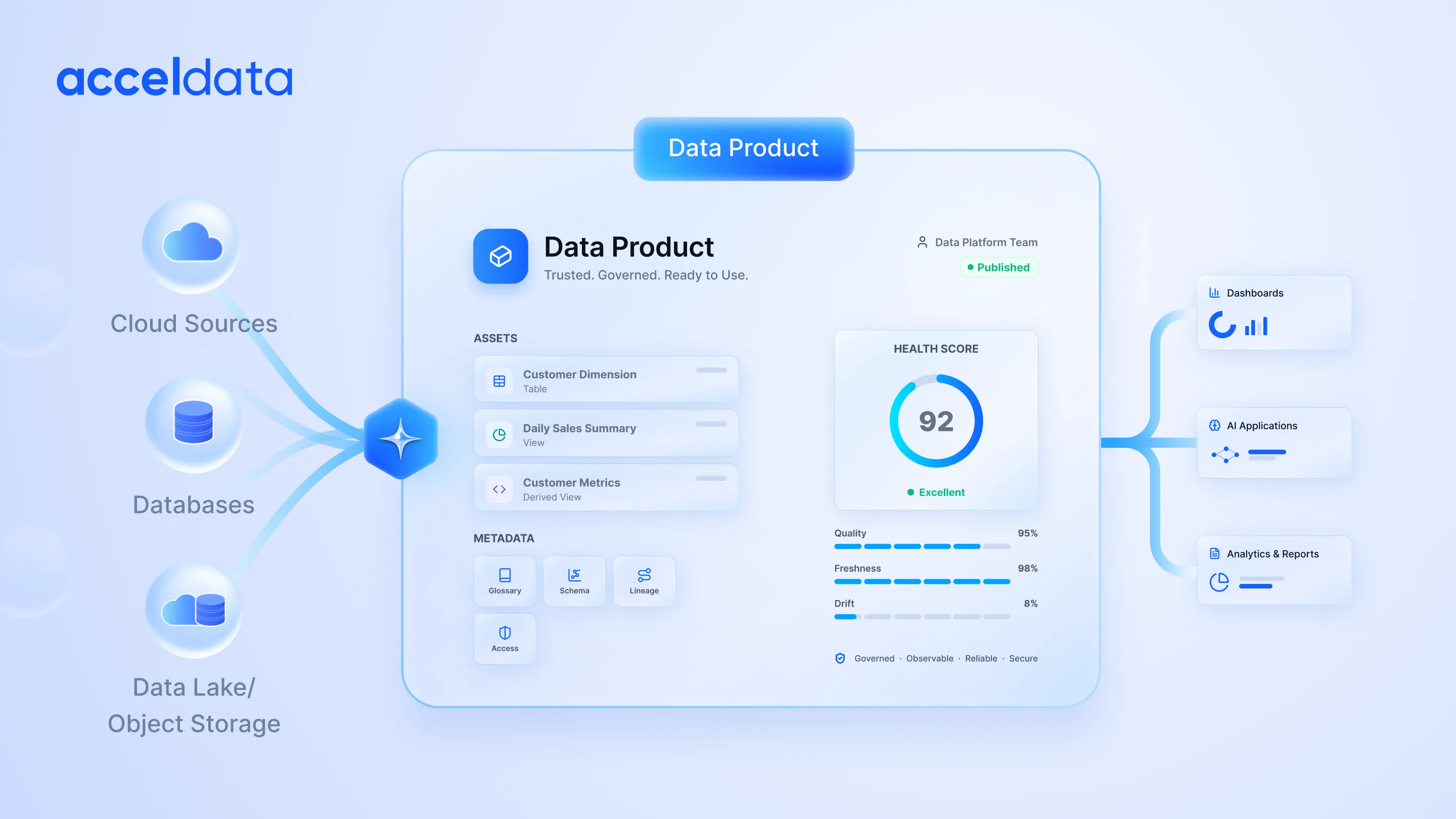
You walk into a vendor demo, and the sales team shows you an impressive dashboard. Real-time alerts flash across the screen, data lineage charts map out your entire ecosystem, and governance metrics update before your eyes.
The vendor confidently declares their platform offers "autonomous governance" that will revolutionize your data operations. But when you ask them to demonstrate how the system actually enforces policies without human intervention, the room goes quiet. Suddenly, there's talk of "configuration phases" and "assisted workflows."
This scenario plays out countless times as organizations evaluate autonomous governance validation solutions. The gap between marketing promises and operational reality has become a critical challenge for buyers trying to assess true autonomy in governance platforms.
Traditional POCs often fail because they focus on visibility features—dashboards, reports, and monitoring capabilities—while glossing over the fundamental question: Can this system actually make and execute governance decisions independently?
Why Autonomous Governance Claims Are Hard to Validate
The governance technology market has become saturated with vendors claiming autonomous capabilities, yet most buyers struggle to distinguish genuine automation from sophisticated monitoring wrapped in AI-powered marketing language. This challenge stems from fundamental misalignments between what vendors demonstrate and what autonomous governance actually requires in production environments.
Marketing Language vs Operational Reality
The disconnect between vendor claims and actual capabilities often hides behind carefully crafted demonstrations. When vendors showcase "AI-powered" dashboards, they're typically displaying visualization tools that aggregate and present data—not systems capable of independent action.
These platforms excel at showing you problems but require human intervention to solve them. During demos, vendors orchestrate what industry insiders call "automation theatre"—pre-scripted scenarios in which everything works perfectly because the conditions are controlled and the outcomes are predetermined.
Real agentic governance POC testing reveals these limitations quickly. You'll notice vendors focusing heavily on their platform's ability to detect issues, generate insights, and create beautiful visualizations. What they don't demonstrate is the system taking corrective action without human approval, adapting to unexpected scenarios, or handling edge cases that weren't part of the demo script.
POCs Focus on Visibility, Not Enforcement
Traditional proof of concepts emphasize the visibility layer because it's easier to demonstrate and less risky for vendors. They'll show comprehensive data lineage mapping, sophisticated quality metrics, and real-time alerting systems.
These features are valuable, but they represent monitoring, not governance. A true governance proof-of-concept evaluation must test whether the system can enforce policies, not just detect violations.
The absence of policy execution testing during POCs creates a dangerous blind spot. Organizations invest in platforms expecting autonomous enforcement but receive glorified reporting tools. When production workloads hit these systems, the lack of enforcement capability becomes painfully apparent as teams scramble to manually address issues the platform merely identifies.
Human-in-the-Loop Masking System Limitations
Perhaps the most deceptive practice involves hiding human dependencies behind seemingly autonomous interfaces. During POCs, vendors maintain teams of engineers who manually execute actions triggered by their platforms.
These manual approvals and interventions occur behind the scenes, creating an illusion of autonomy while masking fundamental system limitations.
Vendor intervention during POCs takes many forms:
- Engineers remotely configure rules in real-time
- Support teams manually executing policy enforcement
- Pre-staged data scenarios that avoid system limitations
- Hidden approval queues managed by vendor personnel
What "Autonomous Governance" Should Mean in a POC
Understanding genuine autonomous governance requires clear criteria that distinguish self-operating systems from human-dependent tools. During your AI governance validation process, these capabilities form the foundation of meaningful evaluation.
Decision-Making Without Human Triggers
Autonomous systems initiate governance actions based on policy definitions and contextual understanding, not human commands. When a data quality issue arises, the platform should recognize the violation, determine the appropriate response, and execute corrective measures independently.
This means no waiting for approval emails, no ticket creation for review, and no dependency on someone clicking a "remediate" button.
The absence of tickets and approvals represents a fundamental shift from traditional governance approaches. Instead of generating work for humans, autonomous systems complete the work themselves, creating audit trails of their decisions and actions for review rather than permission.
Execution, Not Recommendation
The distinction between suggesting and doing separates true automation from advisory tools. When an autonomous governance platform detects unauthorized PII in a data stream, it doesn't just alert you—it masks the data, blocks access, or quarantines the pipeline. These actions occur in real-time without human intervention.
Effective execution capabilities include:
- Automatic data classification and data masking at the point of detection
- Pipeline suspension when quality thresholds breach
- Access revocation for policy violations
- Automated remediation of schema inconsistencies
- Real-time encryption of sensitive data elements
Accountability and Traceability
Autonomous systems must explain their decisions through machine-verifiable audit trails. Every action taken should link back to specific policy rules, contextual factors considered, and the decision logic applied. This transparency enables trust while maintaining compliance requirements.
Core Governance Capabilities Buyers Must Test During a POC
Rigorous testing of specific capabilities reveals whether a platform delivers true autonomy or requires constant human oversight. Focus your governance proof of concept evaluation on these critical areas.
Policy Interpretation and Translation
Can the system convert your written governance policies into executable logic without extensive manual configuration? Test this by providing complex, ambiguous policy statements and observing how the platform handles them:
| Policy Type | Test Scenario | Expected Autonomous Behavior |
|---|---|---|
| Data Quality | "Customer records must be complete and accurate." | System defines completeness rules, monitors violations, and auto-remediates |
| Access Control | "Sensitive data requires approval from the data owner." | Platform identifies sensitive data, enforces approval workflows automatically |
| Retention | "Delete PII after 90 days unless legal hold." | Automatic deletion with exception handling for legal holds |
Edge case handling reveals system sophistication. When policies conflict or scenarios fall outside defined parameters, autonomous platforms should make reasonable decisions while flagging ambiguities for human review—after taking protective action.
Real-Time Enforcement
Enforcement must occur at every stage of the data lifecycle: ingestion, transformation, storage, and consumption. Test whether the system can intercept and modify data flows mid-flight, not just report issues after they've occurred.
Critical enforcement points include:
- Blocking malformed data at ingestion
- Masking sensitive fields during transformation
- Preventing unauthorized access to consumption
- Quarantining non-compliant data automatically
Cross-Platform Consistency
Modern data ecosystems span multiple platforms— data warehouse tools, lakes, streams, and AI/ML pipelines. True autonomous data governance applies consistent policies across all platforms without platform-specific exceptions or manual configuration.
Test policy enforcement across:
- Cloud data warehouses (Snowflake, BigQuery, Databricks)
- Streaming platforms (Kafka, Kinesis)
- ML platforms (SageMaker, Vertex AI)
- Traditional databases
- File storage systems
High-Impact Scenarios to Include in the POC
Real-world scenarios expose platform limitations that controlled demos hide. Include these high-stakes tests in your evaluation.
Schema Drift in Production Pipelines
Production pipelines frequently experience schema changes that break downstream processes. Test whether the platform detects these changes and acts autonomously:
- Add unexpected columns to incoming data
- Change data types mid-stream
- Remove required fields
- Introduce nested structures
The system should detect drift immediately and either adapt the pipeline, quarantine non-conforming records, or roll back changes—all without human intervention.
PII Leakage in Streaming Data
Streaming environments present unique challenges for PII protection. Introduce personally identifiable information into data streams and evaluate the platform's response:
- Social security numbers in log files
- Credit card data in event streams
- Healthcare information in real-time feeds
- Unencrypted passwords in application data
Autonomous platforms should mask, encrypt, or block this data in real-time, maintaining stream continuity while ensuring compliance.
Non-Compliant AI Training Data
AI initiatives often inadvertently use restricted data for model training. Test scenarios where training datasets violate governance policies:
- Biased demographic data
- Outdated consent records
- Geographic restrictions (GDPR, CCPA)
- Intellectual property violations
The platform should prevent model training on non-compliant data automatically while providing alternative datasets or synthetic data options.
Signals That Governance Is Truly Autonomous
Recognizing genuine autonomy requires understanding the key indicators that differentiate self-operating systems from human-dependent tools.
Actions Occur Without Human Confirmation
True autonomous systems execute decisions immediately upon policy violation detection. Watch for these indicators:
Strong Signals:
- Immediate action upon detection
- No approval notifications sent
- Actions complete before alerts fire
- System proceeds through decision trees independently
Weak Signals:
- "Pending approval" statuses
- Email notifications requesting action
- Dashboard alerts without resolution
- Vendor personnel "monitoring" the system
Governance Actions Are Reversible and Versioned
Autonomous systems must handle mistakes gracefully through automatic rollback capabilities. Every governance action should be versioned, reversible, and traceable. Policy changes should propagate across the environment automatically while maintaining the ability to revert if issues arise.
System Learns from Outcomes
Static rules-based systems aren't truly autonomous. Look for platforms that adapt their behavior based on outcomes:
- Reduced false positives over time
- Refined detection thresholds
- Improved response selection
- Contextual understanding of evolution
How to Detect "Fake Autonomy" During a POC
Vendors employ various tactics to simulate autonomy during evaluations. Knowing these patterns helps you identify genuine capabilities.
Over-Reliance on Dashboards and Alerts
If the vendor spends most of the POC showing you dashboards, metrics, and alerting capabilities, you're likely evaluating a monitoring tool, not an autonomous platform. Push for demonstrations of actual enforcement actions and automated remediation.
Manual Scripts Disguised as Automation
Some vendors use pre-written scripts triggered by their platform to simulate autonomous action. Ask to see the underlying decision logic and request changes to test scenarios mid-POC. Genuine autonomous platforms adapt to new scenarios without script modifications.
Inability to Act Without Predefined Scenarios
Autonomous systems handle unexpected situations through policy interpretation and contextual understanding. If the platform only works within narrow, predefined scenarios, it lacks true autonomy. Test edge cases and unusual combinations to expose these limitations.
Questions Buyers Should Ask During the POC
Strategic questions reveal platform limitations and vendor readiness for true autonomous operations.
What Happens If No One Is Watching the System?
This question cuts to the heart of autonomy. If the system requires human monitoring to function effectively, it's not autonomous. Request a test where the platform runs unattended for 48-72 hours with active data flows.
Can the System Break Production on Its Own?
Seemingly counterintuitive, this question reveals whether the platform has real enforcement capabilities. If it cannot impact production systems, it cannot govern them. True governance includes the ability to stop harmful processes.
How Are Conflicting Policies Resolved Automatically?
Policy conflicts are inevitable in complex environments. Autonomous platforms must resolve these conflicts without human intervention while maintaining security and compliance. Request demonstrations of conflict resolution logic.
POC Evaluation Criteria for Autonomous Governance
Use this framework to evaluate platforms during your agentic governance POC:
| Dimension | Weak Signal | Strong Signal |
|---|---|---|
| Decision Making | Human-triggered actions, approval queues | System-initiated responses, autonomous execution |
| Enforcement | Advisory only, generates tickets | Mandatory actions, immediate intervention |
| Adaptability | Static rules require updates | Context-aware decisions, learning behavior |
| Auditability | Manual logs, incomplete trails | Auto-generated evidence, complete decision paths |
| Scalability | Scenario-based, limited scope | Always-on, handles any data flow |
Common POC Mistakes Buyers Make
Understanding common pitfalls helps structure more effective evaluations that reveal true platform capabilities.
Testing Only Happy Paths
Vendors design POCs around scenarios where their platforms excel. Break out of these comfort zones by introducing:
- Malformed data
- Policy conflicts
- High-volume scenarios
- Complex interdependencies
- Regulatory edge cases
Accepting Vendor-Controlled Environments
Insist on testing in environments that mirror your production complexity. Vendor-controlled environments often hide platform limitations through careful configuration and scenario selection.
Ignoring Failure and Edge Conditions
How a platform handles failure reveals its true nature. Test scenarios where:
- Governance actions fail
- Systems become unavailable
- Data volumes spike unexpectedly
- Policies produce unintended consequences
Best Practices for Running a Governance-Focused POC
Maximize your POC effectiveness through structured approaches that reveal genuine autonomous capabilities.
Use Real Production-Like Data
Synthetic datasets hide complexity that challenges governance platforms. Use production-like data that includes:
- Actual schema complexity
- Real data quality issues
- Genuine PII patterns
- Production volumes and velocity
Remove Human Approvals Wherever Possible
Configure the platform to operate data workflows without approval during testing. This constraint forces vendors to demonstrate true autonomous capabilities rather than human-assisted automation.
Measure Actions, Not Dashboards
Track data quality metrics that matter:
- Actions taken autonomously
- Issues resolved without intervention
- Policy enforcement success rate
- Time from detection to resolution
What a Successful Autonomous Governance POC Looks Like
Success manifests through observable behaviors that confirm autonomous operation. Governance actions should occur continuously without human intervention, handling both routine and exceptional cases effectively. When failures occur, the system should respond safely and transparently, maintaining operational continuity while protecting data integrity.
Business teams develop trust in autonomous systems through consistent, predictable behavior that aligns with policy intentions. This trust enables organizations to scale governance without proportionally scaling human oversight teams.
Validating autonomous governance validation claims requires structured approaches that expose the gap between marketing promises and operational reality. By focusing on actual enforcement capabilities rather than monitoring features, testing edge cases and failure scenarios, and demanding evidence of system-initiated actions, buyers can distinguish genuine autonomous platforms from sophisticated monitoring tools.
The journey toward trusted autonomous governance demands rigorous validation during POCs. Organizations must resist the allure of impressive dashboards and demand demonstrations of independent decision-making and enforcement. Only through comprehensive testing across real-world scenarios can buyers confidently identify platforms capable of delivering true governance automation.
Acceldata's Agentic Data Management platform exemplifies genuine autonomous governance through AI agents that detect, diagnose, and remediate data issues independently.
Unlike traditional tools requiring constant human oversight, Acceldata's xLake Reasoning Engine powers intelligent automation across your entire data stack—from quality checks to cost optimization—while maintaining complete audit trails of every autonomous decision.
Experience the difference between monitoring and true autonomy: Acceldata's platform delivers 90%+ performance improvements while reducing operational overhead by up to 80%, letting your data teams focus on innovation instead of manual governance tasks.
Schedule a demo to know more!
FAQs
How long should an autonomous governance POC run?
Meaningful AI governance validation requires a minimum of 30-day POCs with production-like workloads. Shorter durations allow vendors to maintain manual oversight that masks platform limitations. Extended testing reveals the sustainability of autonomous operations.
Can autonomous governance be validated without production data?
While possible, synthetic data significantly limits validation effectiveness. Production data complexity, volume, and variety expose platform limitations that sanitized datasets hide. If regulations prevent production data use, create synthetic datasets that match production complexity.
Should vendors be allowed to intervene during the POC?
Limited intervention for initial setup is acceptable, but operational intervention defeats the purpose of autonomy validation. Establish clear boundaries: vendors can explain and configure, but cannot execute governance actions on the platform's behalf.
What's the biggest red flag during governance POCs?
Excessive vendor involvement during operations signals a lack of true autonomy. If vendor personnel must monitor, adjust, or approve platform actions, you're evaluating assisted automation, not autonomous governance.


.png)