.svg)


.webp)

If you’re a data engineer or data leader, you understand that a data pipeline is much more than just a sequence of transformations—it's the lifeblood of your organization’s analytics and AI initiatives. Yet, as your data flows, it faces risks: quality degradation, compliance breaches, and a lack of transparency. These issues are costly; in fact, a 2023 Forrester study found that more than one-quarter of data and analytics employees estimate they lose over $5 million annually due to poor data quality, with 7% reporting losses of $25 million or more.
The key to preventing this is embedding data governance early and often. You need a proactive strategy to secure, validate, and track data the moment it enters your pipeline, ensuring your downstream analytics and AI models are built on a foundation of trustworthy, compliant data. This article will walk you through how to implement data governance in your pipelines, moving your operations from data crisis management to intelligent, preventative governance
What Does Data Governance in Pipelines Really Mean?
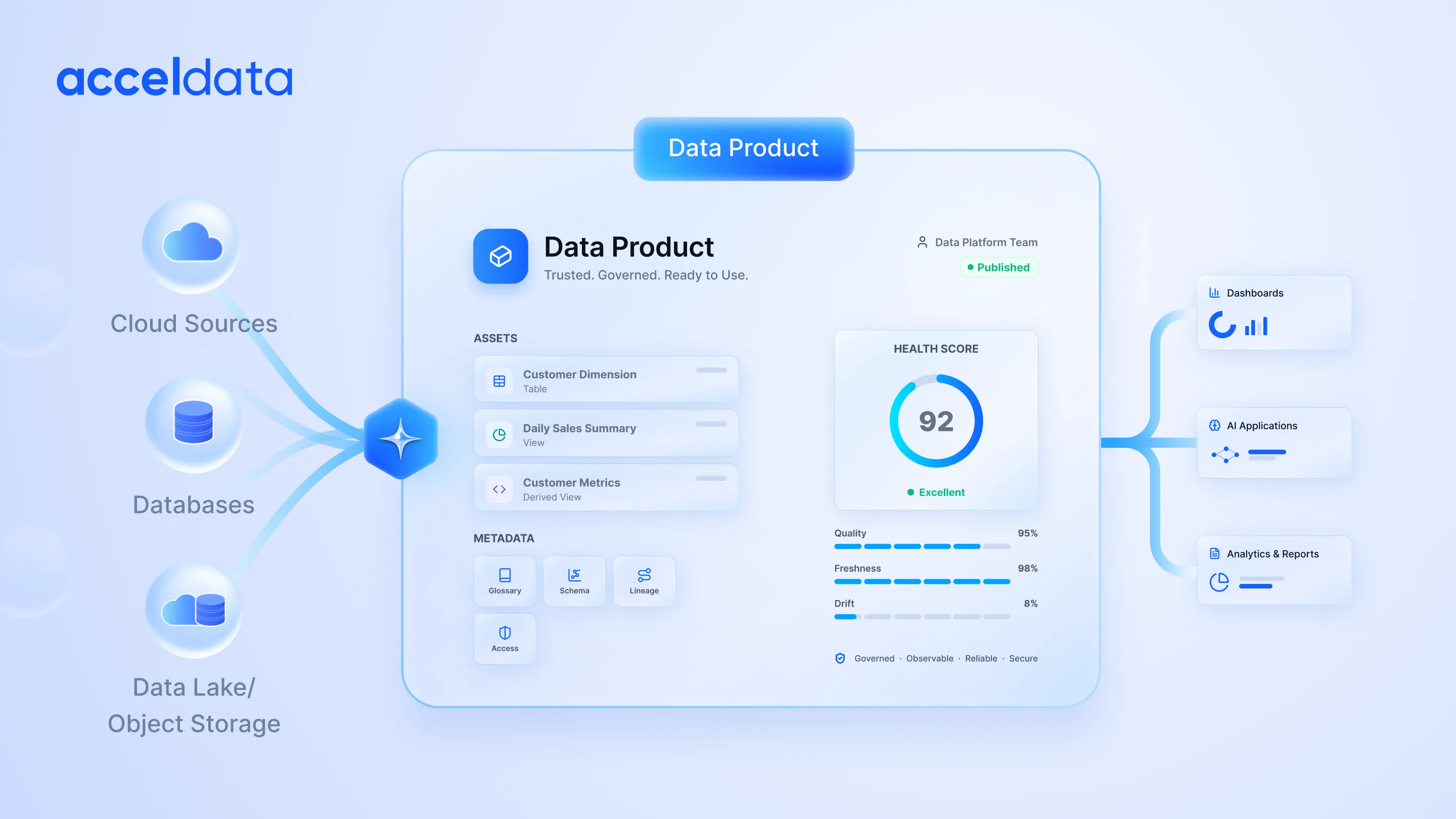
Data governance is the combination of people, processes, and technology that ensures your data is used correctly, securely, and effectively. When we talk about governance in data pipelines, we’re talking about codifying those rules and controls directly into the data flow architecture itself.
Governance as a Layer in Data Engineering
Think of governance not as an external audit, but as an embedded layer of quality and control. This layer is actively enforced at every stage of the pipeline: during ingestion, transformation, and loading.
- Metadata management: Automatically tagging data with context, such as source, schema, owner, and sensitivity level.
- Data lineage: Tracking the complete lifecycle of data, showing where it came from and how it was transformed.
- Data quality checks: Implementing validation rules to ensure accuracy, completeness, and consistency before data is passed downstream.
- Access controls: Applying permissions to data assets based on user roles and data sensitivity, often at the column or row level.
Why Pipeline Governance Differs From Platform Governance
Traditional platform governance focuses on the data at rest—in the warehouse or lake. Pipeline governance focuses on the data in motion. While platform governance defines who can access the final data asset, pipeline governance dictates how that data asset is created, transformed, and certified as fit for use. By shifting left and governing data at the pipeline level, you catch errors and enforce policies before the data lands, where fixing issues is cheapest and easiest.
This proactive "shift-left" strategy is essential for building trust in your data. Ultimately, pipeline governance ensures that the data delivered to your business is not just available, but verifiably fit for purpose.
Why Pipeline Governance Matters for AI, Analytics, and Compliance
Ungoverned pipelines introduce unnecessary risk into your organization. Without clear rules enforced at the source, you can't guarantee that the data powering your most critical decisions is reliable or compliant.
Reducing Errors and Ensuring Data Quality
The most immediate benefit of governance in your pipelines is a dramatic reduction in data errors. When data quality is not actively managed, issues like schema drift, null values, or duplicate records can easily break downstream processes.
With governance embedded, you can enforce schema contracts and execute data quality checks on ingestion. This proactive approach ensures that only clean, certified data moves forward, significantly improving the trustworthiness of your analytics.
Enforcing Compliance Across Pipelines
Regulatory mandates like GDPR, CCPA, and HIPAA require you to know exactly where sensitive data resides and how it is being processed. Attempting to audit compliance manually across hundreds of pipelines is simply not scalable.
By integrating governance, you can:
- Automatically classify sensitive data (e.g., PII).
- Mask or tokenize data the moment it enters the pipeline.
- Maintain an immutable audit trail via automated data lineage, proving compliance to auditors.
Improving AI Model Reliability
Your AI models are only as good as the training data they consume. If a model is trained on poor-quality or biased data from an unverified pipeline, the resulting predictions will be flawed, leading to poor business outcomes. Data quality and lineage are non-negotiable for trustworthy AI.
A strong pipeline governance framework ensures your AI training datasets are:
- High quality: Verified for accuracy and completeness.
- Transparent: Full lineage tracking ties the model output back to the original source data.
- Compliant: All sensitive data handling is documented and enforced.
By addressing governance at the pipeline level, you effectively future-proof your data assets against compliance risks and ensure every downstream insight—from standard reports to complex AI models—is built on a foundation of verifiable trust and transparency.
Ways to Implement Data Governance in Your Pipelines
Implementing governance effectively requires a systematic approach that blends technical checks with clear policies. Here are the most effective ways to implement data governance in your pipelines:
Add Data Quality Checks at Every Stage
Data quality isn't a one-time process; it's a continuous control. Instead of checking quality only at the end, integrate validation rules into every critical transformation step.
- Ingestion: Validate format, schema, and completeness against a defined contract.
- Transformation: Check for consistency and adherence to business rules (e.g., all customer IDs are unique).
- Final load: Run aggregate checks before data is made available for consumption.
Implement Metadata and Lineage Tracking
Visibility is the cornerstone of governance. You need to know where your data has been. Data lineage tracking automatically maps the flow of data from its source system through all pipelines, transformations, and end-user dashboards. This active metadata is essential for:
- Impact analysis: Quickly identifying which downstream reports or models will be affected by a source system change.
- Root cause analysis: Tracing a data quality issue back to the exact step in the pipeline that caused the error.
Use Access Controls and Role-Based Permissions
Data access must be managed dynamically within the pipeline flow. Not every user needs to see raw, sensitive data. Use Role-Based Access Control (RBAC) to restrict permissions based on user role. This should go beyond simple table access to include granular controls:
- Column-level security: A data scientist might see masked customer names, while a compliance officer sees the unmasked version.
- Row-level filtering: Restricting regional analysts to only see data from their respective regions.
Set Up Policy Enforcement and Validation Rules
Governance policies must be turned into code that the pipeline can execute. This is often referred to as Policy-as-code.
- Define rules like "All PII data must be masked" or "Data schemas must not drift."
- Implement automatic validation rules that halt the pipeline if a policy is violated, triggering an alert to the data owner.
Build Automated Monitoring and Alerts
Manual checks are slow and prone to human error. Automation is the only path to scalable governance. You need a platform to actively monitor your pipelines for compliance, quality, and performance.
- Set up alerts for anomalies in data quality metrics (e.g., a sudden spike in null values).
- Track key performance indicators, such as time-to-delivery and error rates.
By adopting these systematic ways to implement data governance in your pipelines, you move from theoretical compliance to practical, enforced controls that guarantee the integrity and security of your data flow. Implementing these methods is how you ensure that your data engineering efforts directly translate into high-quality, trustworthy data ready for any business demand.
Designing Pipelines With Governance-by-Default
The most advanced way to implement data governance is to design your data ecosystem so that governance is the default state—not an afterthought.
Template-Based Pipelines
Standardization is key. By using template-based pipelines or a common data orchestrator, you can inject standard governance components automatically. Every new pipeline starts with built-in data quality checks, mandatory metadata tagging, and integrated lineage collection. This removes the chance of engineers forgetting to add governance controls.
Governance Blueprints
Create approved governance blueprints for common tasks. For example, a "Finance Reporting" blueprint automatically applies all necessary access controls, regulatory masking, and specific quality rules required for financial data. This allows engineers to deploy compliant pipelines in minutes.
Standardized Schema Contracts
Require formal schema contracts between the pipeline stage that produces data and the stage that consumes it. These contracts define the required format, data types, and quality expectations (e.g., "Customer ID must be unique and non-null"). Tools should automatically validate the data against this contract, flagging any violation as a governance breach right away.
By integrating these design principles, you make governance an intrinsic feature of your pipeline architecture, not an external burden, significantly reducing the cognitive load on your engineering team. This governance-by-default approach is essential for achieving the scale and velocity required for modern data and AI initiatives.
Tools and Technologies for Pipeline Governance
The right tooling can transform your approach to implementing how to implement data governance in your pipelines from a manual chore to an automated function.
Cataloging & Metadata systems
These tools are the foundational layer for governance, providing a central inventory of all your data assets. They automatically collect metadata, enable data discovery, and serve as the source of truth for ownership and context.
Data Quality Platforms
Specialized platforms enable you to define, manage, and execute thousands of data quality rules at scale. The best ones integrate directly into the pipeline to run checks in real-time, preventing bad data from moving forward.
Access Control & Security Tools
These tools manage user permissions and sensitive data handling. They enforce security policies across various data stores, applying dynamic masking and encryption to ensure compliance with privacy regulations.
Agentic Governance Platforms (Modern Approach)
The latest evolution in data management is the agentic data management platform, like the one offered by Acceldata. This approach moves beyond passive monitoring by using AI agents to automate governance tasks.
- An AI data quality agent can proactively detect anomalies and suggest or even automatically deploy fixes.
- A data lineage agent can continuously map data flows and monitor for schema drift.
This agentic architecture is the fastest, most scalable path to autonomous, governance-by-default pipelines.
Implementation Roadmap: From Design to Automation
To successfully implement data governance in your pipelines, follow a phased, intentional roadmap.
Step 1: Assess Existing Pipelines
You can't govern what you don't know. Start by gaining full visibility into your current data landscape.
- Identify all data sources, pipelines, and consumers.
- Pinpoint existing governance gaps (e.g., lack of lineage, missing quality checks).
- Prioritize the most critical, high-risk, or regulation-heavy pipelines to tackle first.
Step 2: Define Governance Use Cases
Don't try to govern everything at once. Define specific, measurable governance goals tied to business outcomes.
- Example Use Case: "Reduce failed customer-facing reports due to bad data by 90%."
- Example Policy: "The primary key column in the Customer table must be 99.9% complete."
Step 3: Deploy Tools and Controls
This is where you integrate the chosen technology. Start with a minimum viable product (MVP) in a low-stakes environment.
- Implement automatic data lineage tracking across your prioritized pipelines.
- Add key data quality checks at ingestion and major transformation points.
Step 4: Automate Policies and Monitoring
Move from manual enforcement to automation. This is the stage where you begin to see ROI.
- Turn your governance policies into executable code and embed them into your CI/CD process.
- Configure automated anomaly detection and alerting in your data observability platform.
Step 5: Measure Governance Impact
Governance is a continuous discipline, not a one-time project. You must track its success.
- Measure metrics like "mean time to resolution for data quality issues" and "percentage of compliant data assets."
- Communicate these wins to stakeholders—for example, showing how governance has improved data-driven decision-making.
Following this roadmap allows you to build a governance framework incrementally, ensuring that every step contributes to a more reliable, auditable, and automated data ecosystem. This structured approach is the key to achieving governance maturity and maintaining continuous trust in your most critical data pipelines.
The Next Level: Acceldata’s Agentic Data Management for Pipeline Governance 🧠
To truly master how to implement data governance in your pipelines, you need to shift your mindset from merely monitoring data flows to achieving autonomous data operations. This is the promise of Acceldata's Agentic Data Management platform.
Acceldata uses a sophisticated AI-first approach where intelligent agents work inside your data environment, continuously learning, diagnosing, and acting on your behalf. These agents automate the hardest parts of governance—proactively identifying data quality issues, ensuring lineage is always current, and enforcing policies without human intervention.
By centralizing governance on a modern platform like Acceldata, you don’t just meet compliance mandates; you transform your data into a reliably trustworthy asset, ready for your most complex AI and analytics endeavors.
Summary: Governance Makes Pipelines Reliable, Safe, and AI-Ready
Implementing comprehensive data governance in your pipelines is no longer optional—it's the bedrock for scaling your data-driven enterprise and responsibly developing AI. By embracing a strategy that prioritizes quality checks, full lineage, and automation, you can ensure your data is always safe, reliable, and compliant.
Ready to move beyond manual checks and activate a truly intelligent, automated governance program?
Explore how Acceldata's Agentic Data Management Platform can automate data quality, lineage, and governance across all your data pipelines. Book your demo today!
FAQs about How to Implement Data Governance in Your Pipelines
How do you implement data governance in your pipelines?
You implement data governance in pipelines by integrating four key components at every stage (ingestion, transformation, load): Policy Enforcement, Data Quality Checks, Metadata/Lineage Tracking, and Automated Monitoring. This "shift-left" approach ensures rules are applied proactively, catching issues early and guaranteeing data quality and compliance throughout the data flow.
What tools help enforce data governance in pipelines?
Tools that help enforce data governance include: Data Quality Platforms for validation, Data Cataloging Systems for metadata and ownership, Access Control/Security Tools for permission management and masking, and modern Agentic Data Management Platforms (like Acceldata) that use AI to automate detection and enforcement.
How do you add lineage tracking to pipelines?
You add lineage tracking by using specialized tools that automatically parse pipeline code or monitor data movement to map the complete, end-to-end flow of data—from source to consumption. This process creates a visual, auditable trail showing every transformation a data set has undergone, which is essential for impact analysis and compliance.
How do you automate governance in data engineering workflows?
You automate governance using a combination of Policy-as-Code, Pipeline Templates, and Data Observability platforms. By using templates, you standardize governance controls. By treating policies as code and integrating them into your CI/CD, you enforce rules upon deployment. Observability tools then automate the continuous monitoring and alerting for policy violations.
What governance controls matter most for AI pipelines?
The most critical governance controls for AI pipelines are High-Fidelity Data Quality and Comprehensive Data Lineage. High quality ensures the model is trained on accurate data, preventing bias and failure. Lineage ensures explainability and auditability, allowing you to trace a model’s output back to its source data for compliance and troubleshooting.


.png)