.svg)



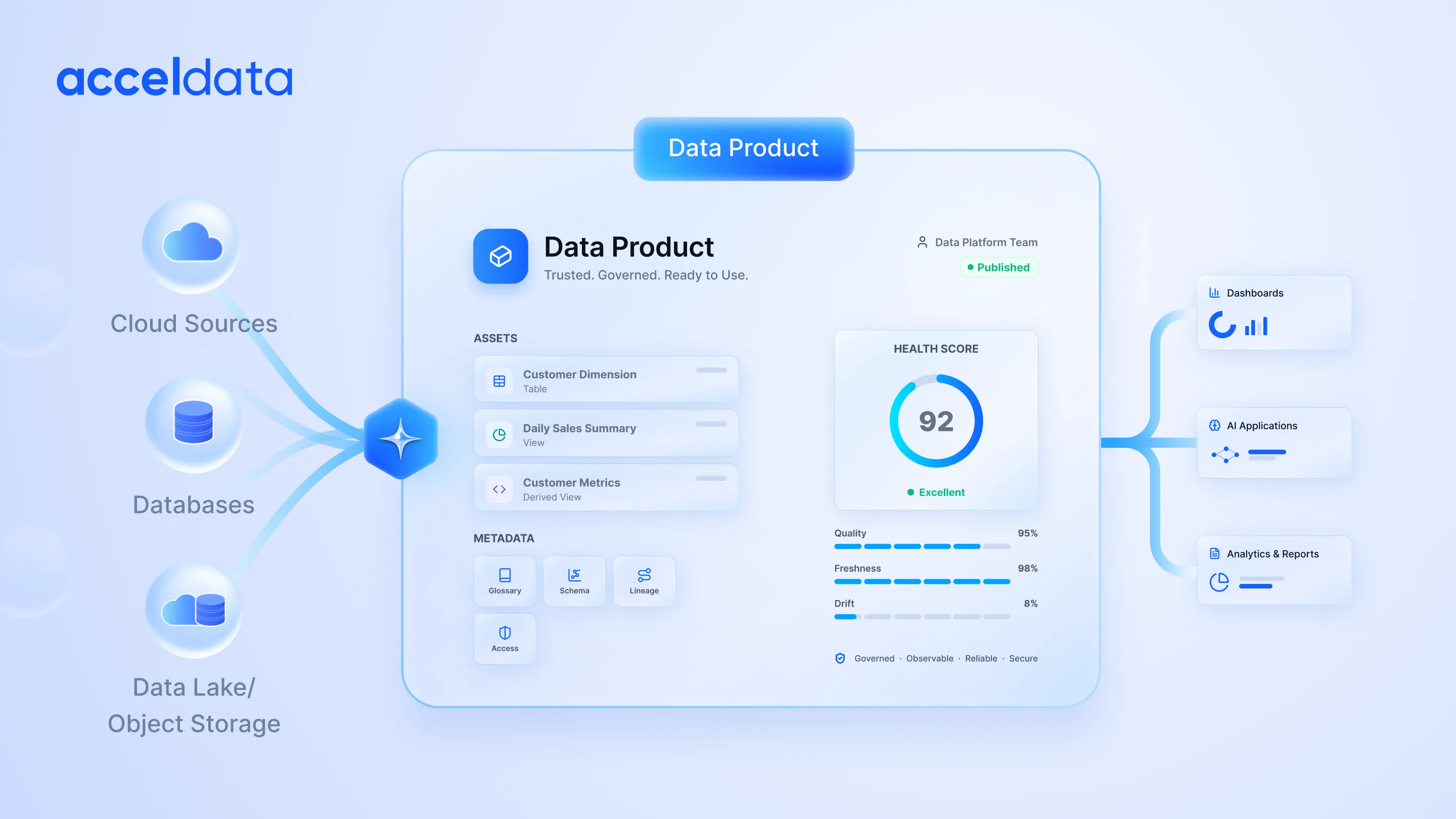
In an era defined by massive data volumes, stringent regulatory requirements like GDPR and HIPAA, and the acceleration of AI initiatives, effective data governance is non-negotiable. The average cost of a data breach in the U.S is $4.4 million; the figure indicates that data governance is a necessity for organizations.
However, as you look to implement a platform to manage data quality, security, and compliance, a central question arises: What is the usual pricing of data governance platforms?
Understanding the cost structure is essential for accurate budgeting and securing executive buy-in. The truth is, there is no single sticker price. The pricing of data governance platforms is highly dependent on your data ecosystem's complexity, the scale of your operations, and the level of automation the platform provides. This guide cuts through the complexity, detailing the models, the costs, and the factors you need to consider to make an informed investment decision.
What Is the Pricing of Data Governance Platforms?
The cost for robust data governance can vary dramatically, ranging from simple, low-cost entry models for small teams to multi-million dollar annual investments for global enterprises.
- Entry-level/SMB tools: You might find basic tools starting as low as $5,000 to $20,000 annually. These usually cover essential data cataloging or metadata management for small, defined data sets.
- Enterprise-grade platforms: For complex organizations managing petabytes of data across multiple clouds, the annual spend can range from $150,000 to well over $1,000,000, excluding implementation and maintenance costs.
This wide range is a direct reflection of the platform's features, scalability, and how it measures usage. Before diving into the actual numbers, let's explore the core components that generate value—and costs.
Typical Pricing Models Used by Data Governance Platforms
Vendors structure their pricing based on how they deliver value. You will encounter several models when researching the pricing of data governance platforms:
Subscription-Based (SaaS) Pricing
This is the most common model, especially for cloud-native tools. You pay a recurring fee (monthly or annually) to access the platform.
- Cost driver: Features unlocked (e.g., data catalog vs. full governance suite), number of users, and data capacity limits.
- Benefit: Predictable operational expenditure (OpEx) and minimal upfront capital expenditure (CapEx).
Usage-Based / Consumption Pricing
This model charges you based on specific metrics of consumption. This is increasingly popular with cloud platforms.
- Cost driver: Volume of data processed, number of scanning jobs run, compute time used for profiling, or API calls made.
- Benefit: Scales with your actual business use; you only pay for what you consume.
Per-User or Role-Based Pricing
Pricing is directly tied to the number of people who access and use the platform.
- Cost driver: The number of licensed users. Often, there are different tiers (e.g., "Viewer," "Data Steward," "Administrator") with varying costs.
- Benefit: Simple to track for smaller teams, but costs can escalate quickly if many employees require access.
Enterprise Licensing Models
Used by large, traditional software vendors, this model often involves negotiating a comprehensive fee for unlimited use across the organization.
- Cost driver: The overall size of the organization, revenue, and commitment length.
- Benefit: Predictable, fixed cost for high usage; covers scalability needs without sudden fee spikes.
Hybrid or Tiered Pricing
Many modern vendors combine the above models, offering tiers (Basic, Pro, Enterprise) that bundle features and may add charges for consumption (e.g., "Enterprise tier + $X per TB over the limit").
What Is the Usual Pricing of Data Governance Platforms?
When considering what is the pricing of data governance platforms, you need to look at specific market segments to get a realistic estimate.
Entry-Level Pricing (SMBs)
For small businesses or focused departmental use cases, annual software costs generally fall between $5,000 and $25,000. This covers basic features like a single-source data catalog and fundamental data quality checks.
Mid-Market Pricing
Companies with growing data volumes (dozens of data sources) and increasing regulatory needs typically spend in the range of $50,000 to $150,000 per year on software subscriptions. This tier introduces more sophisticated features like automated data lineage and role-based access controls.
Enterprise Pricing Range
Large organizations—those with complex hybrid or multi-cloud environments, thousands of users, and petabytes of data—should expect annual subscription costs between $150,000 and $1,000,000+. This includes highly scalable architecture, comprehensive AI-driven features, dedicated support, and custom integrations.
Additional Costs to Consider (Implementation, Training, Support)
Remember, the subscription fee is only part of the story. You must budget for:
- Implementation/integration: Professional services to connect the platform to all your data sources. This can range from 20% to 100% of the first year's license cost.
- Training and change management: Costs for training Data Stewards, engineers, and analysts.
- Premium support: Additional fees for 24/7 or dedicated technical support.
- Internal personnel: The time spent by your internal teams (Data Engineers, IT) managing and maintaining the platform.
These varied models mean you must look beyond the base subscription cost and carefully assess the drivers—whether it's user count or consumption—to truly understand the long-term expense. By matching the vendor's pricing structure to your organization's anticipated growth and usage patterns, you ensure a cost-effective investment in your data governance future.
Key Factors That Influence the Pricing of Data Governance Platforms
Understanding these drivers allows you to negotiate effectively and ensures you only pay for the features and scale you truly need.
Data Volume, Scale, and Complexity
The sheer size of your data (TB or PB) is the primary cost factor. Vendors charge more for systems designed to scan and process massive catalogs. Complex data types (streaming, unstructured) also incur higher costs than simple relational data.
Number of Users, Roles, and Business Units
If you plan to roll out the platform to hundreds of business users, data analysts, and stewards, expect a higher price compared to a tool only used by a small compliance team. Role-based pricing tiers further segment this cost.
Deployment Model (Cloud, On-Prem, Hybrid)
Cloud-native (SaaS) platforms often have a lower initial cost but rely on recurring subscription fees. On-premises deployments may have high upfront licensing costs but offer more control over long-term operating expenses (though you bear the infrastructure cost).
Required Integrations and Customizations
A platform that must integrate with a dozen disparate data sources (Snowflake, AWS, Azure, on-prem Hadoop, etc.) will cost more than one connecting to just one or two. Custom development for specific governance workflows also adds significant professional services fees.
Compliance, Security, and Regulatory Needs
If your industry (like finance or healthcare) requires advanced security features, masking, or continuous compliance reporting, you will be directed toward higher-priced, specialized tiers.
Automation and AI Maturity of the Platform
Platforms that rely heavily on manual metadata tagging or user input are cheaper. Advanced platforms, like those offering Agentic Data Management (ADM), use AI agents for automated data quality, anomaly detection, and policy enforcement, commanding a premium due to the reduced manual labor required on your side.
Ultimately, the platform's price reflects the level of sophisticated automation and scalability it provides to match your environment. Therefore, focusing on the factors that minimize manual intervention and maximize regulatory assurance will guide you to the most cost-effective solution for your long-term governance needs.
Pricing Comparison: Enterprise Platforms vs. Lightweight Governance Tools
To help you align cost with capability, here is a comparison of two distinct categories of governance platforms:
| Category | Lightweight tools | Enterprise platforms |
|---|---|---|
| Initial cost | Low ($5K - $50K/year) | High ($150K - $1M+/year) |
| Implementation time | Weeks | 3–12+ Months |
| Manual effort required | High (Requires human tagging/maintenance) | Low (High automation, AI-driven) |
| Risk reduction | Basic (Covers simple compliance) | High (Real-time policy enforcement, anomaly detection) |
| Scalability | Limited (Struggles beyond 10 data sources) | High (Handles PB-scale, hybrid/multi-cloud) |
| Long-term ROI | Low (Efficiency limited by manual effort) | High (Achieves operational efficiency, lowers cost of compliance) |
How to Estimate Your Data Governance Budget Accurately
To avoid sticker shock and ensure you get maximum value, you must base your budget on a clear understanding of your needs.
Create a Governance Maturity Baseline
Assess where your organization stands today. Are you just starting with metadata management, or do you need fully automated, real-time data quality enforcement? Your maturity level directly dictates the necessary platform complexity—and therefore the cost.
Evaluate Use Cases and Stakeholders
List the top five business problems the platform must solve (e.g., "Reduce compliance reporting time" or "Improve marketing campaign data quality"). Calculate the ROI of solving these problems to justify the investment. Also, quantify the exact number of users and roles that require access.
Identify Hidden or Long-Term Costs
Factor in recurring cloud infrastructure costs (if using an on-prem license but hosting the database in the cloud), fees for API usage, and the cost of internal resources dedicated to maintenance.
How to Avoid Overpaying
Focus on platforms that offer high levels of automation. Platforms that require vast manual effort from your data stewards often cost more in salary expenditure than the savings from a cheap software license. Invest in tools that reduce human labor.
Accurately estimating your budget requires moving past simple software costs and accounting for both internal labor and the ROI of your key governance use cases. A thoughtful assessment ensures your investment aligns perfectly with your business maturity, preventing unexpected expenses and guaranteeing maximum value from your chosen platform.
How Modern AI/Agentic Platforms Impact Governance Costs
The rise of AI-powered and agentic data management platforms is fundamentally shifting the economic equation of data governance. While their annual subscription might be higher than legacy tools, the Total Cost of Ownership (TCO) is often lower.
How? These platforms use AI agents to automate tasks that previously required expensive, senior Data Stewards and Engineers:
- Automated data quality: Agents continuously monitor, detect, and correct data anomalies, drastically reducing the labor needed for manual data cleansing.
- Autonomous lineage: Lineage is mapped automatically across complex pipelines, eliminating the quarterly manual effort to update documentation.
- Faster time-to-value: AI accelerates discovery and cataloging, getting your governance program operational in months, not years, thereby reducing costly implementation time.
When evaluating the pricing of data governance platforms, remember that time and human labor are your most expensive resources. Platforms that conserve both provide the best long-term ROI.
Maximizing ROI While Controlling Governance Spend: The Acceldata Advantage
Understanding what is the pricing of data governance platforms is more complex than just reading a price sheet. It requires you to weigh the subscription cost against the platform's ability to drive automation, reduce manual effort, and mitigate regulatory risk.
Your ultimate goal is to find a platform that provides the most automation per dollar. This is where Acceldata's Agentic Data Management (ADM) platform offers a distinct advantage. ADM moves governance beyond manual oversight by using AI agents to autonomously monitor, assess, and manage your entire data ecosystem.
How Acceldata Helps with Governance and Cost Control:
- Autonomous Data Quality & Lineage: Acceldata's agents automate labor-intensive tasks like data quality enforcement and lineage tracking, drastically reducing the high operational costs associated with manual data stewardship.
- Cost Optimization: The ADM platform provides deep visibility into your data cloud spend and usage, identifying waste and optimizing resource allocation. This cost-control feature directly offsets the platform's investment.
- Integrated Observability: By converging governance with data observability, Acceldata ensures continuous compliance and minimizes the time and cost spent reacting to data issues, thereby lowering your long-term TCO.
Ready to streamline your data governance? Book a demo with Acceldata today
Frequently Asked Questions (FAQs)
What is the usual pricing of data governance platforms?
The usual annual software pricing ranges from $5,000 to $25,000 for basic SMB tools up to $150,000 to over $1,000,000 for large, enterprise-grade, multi-cloud platforms.
Why do different vendors have such different pricing structures?
Vendors differ because they price based on their core value drivers: some charge by the number of users (per-user), some by the volume of data processed (consumption-based), and others by the suite of features unlocked (subscription tiers).
Are data governance platforms expensive for small businesses?
Basic governance tools that focus primarily on data cataloging and metadata are affordable for small businesses (starting around $5,000/year). However, implementing enterprise-grade features that include full data quality and policy enforcement can become expensive quickly.
What hidden costs should companies be aware of?
Hidden costs include professional services for implementation (often 20%-100% of the first year's license cost), ongoing cloud infrastructure costs for compute, and the significant internal labor hours required for change management and training.
How do cloud vs. on-prem governance platforms differ in pricing?
Cloud (SaaS) platforms typically have lower upfront costs but higher, recurring subscription fees (OpEx). On-premise platforms have a higher initial software license cost (CapEx) but give you more control over ongoing infrastructure costs.
What factors influence the long-term cost of governance tools?
The long-term cost is heavily influenced by the level of automation (reducing labor costs), the scalability (avoiding costly re-platforming), and the platform's ability to integrate with new data sources without extensive custom development.
How can I reduce my data governance platform costs?
You can reduce costs by:
1) Choosing a consumption-based model if your usage fluctuates,
2) Limiting the initial deployment to only the essential user roles.
3) Investing in AI/Agentic platforms that automate labor-intensive tasks like data quality and lineage.


.png)